
VAT registration review
Review turnover, taxable activity and timing before preparing an agreed registration application where appropriate.
We help businesses review their VAT position, organise the supporting records, prepare agreed returns and deal with practical VAT questions without implying any official affiliation or guaranteed outcome.
Sales records availableTaxable supplies and VAT treatment reviewed
Purchase records organisedSupporting invoices and business purpose checked
Exceptions under reviewUnclear rates, missing documents or unusual items
Client approval pendingDraft return reviewed before submission
Review whether and when action may be required.
Maintain a usable audit trail for the return.
Review transactions before final figures are approved.
Assess errors and the appropriate reporting route.
Two transactions with similar values can have different VAT outcomes because the goods, services, customer, location, timing or available evidence differ.
That is why a reliable VAT process needs more than totals from a bank feed. The underlying records, VAT codes and unusual transactions must be reviewed before the return is finalised.
The agreed scope depends on your current registration status, business activity, filing frequency, accounting system and the complexity of the transactions involved.
Review turnover, taxable activity and timing before preparing an agreed registration application where appropriate.
Prepare periodic returns using the available digital records and supporting information.
Help establish a digital-record and compatible-software workflow for VAT reporting.
Consider whether a commonly used accounting scheme may be relevant to the business circumstances.
Identify unusual or inconsistent VAT treatment before it flows into a return.
Assess an identified error, the periods affected and the available correction route.
Review sector-specific transactions within the limits of the agreed work and available evidence.
Review whether deregistration may be relevant and prepare the agreed application and closing information.
Each stage creates an opportunity to catch missing records, inconsistent VAT codes and unusual transactions before submission.
Sales, purchases, bank activity and supporting documents are brought up to date.
Records are compared with the available statements and system totals.
Unusual rates, missing invoices, imports, reverse-charge items or large movements are queried.
The business checks the result and confirms approval before submission.
The agreed return is submitted and payment or follow-up information is explained.
Businesses should review their taxable turnover and activity regularly rather than waiting until a year-end meeting. Voluntary registration can also create responsibilities that should be understood before an application is made.
The review should focus on relevant taxable supplies rather than simply using total cash received.
A rolling review can produce a different answer from looking only at the latest annual accounts.
Registration may change invoicing, pricing, customer communication and record-keeping.
VAT codes, invoice wording, digital records and filing software should be prepared before the first return.
The potential advantages and ongoing responsibilities should both be assessed.
These sections explain common pressure points without claiming that every complex issue can be resolved within a routine return service.
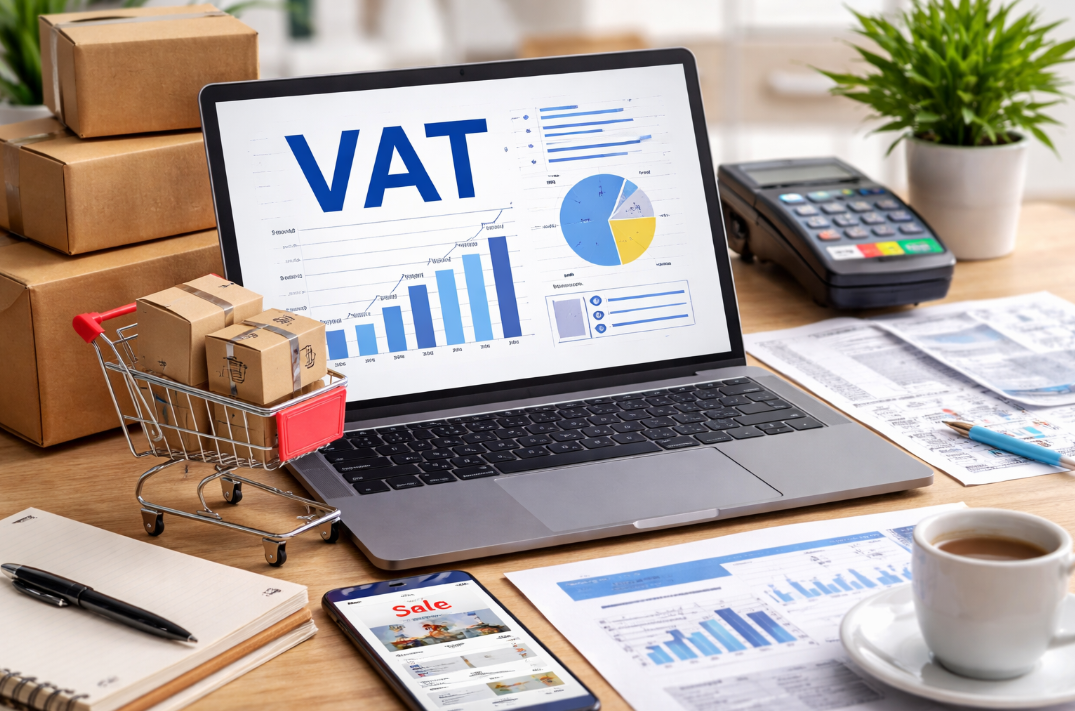
E-commerce businesses often need platform settlements, refunds, fees and cross-border information reconciled before the UK VAT return can be considered complete.

Construction services, property transactions and domestic reverse-charge records may require closer review than ordinary sales and purchases.
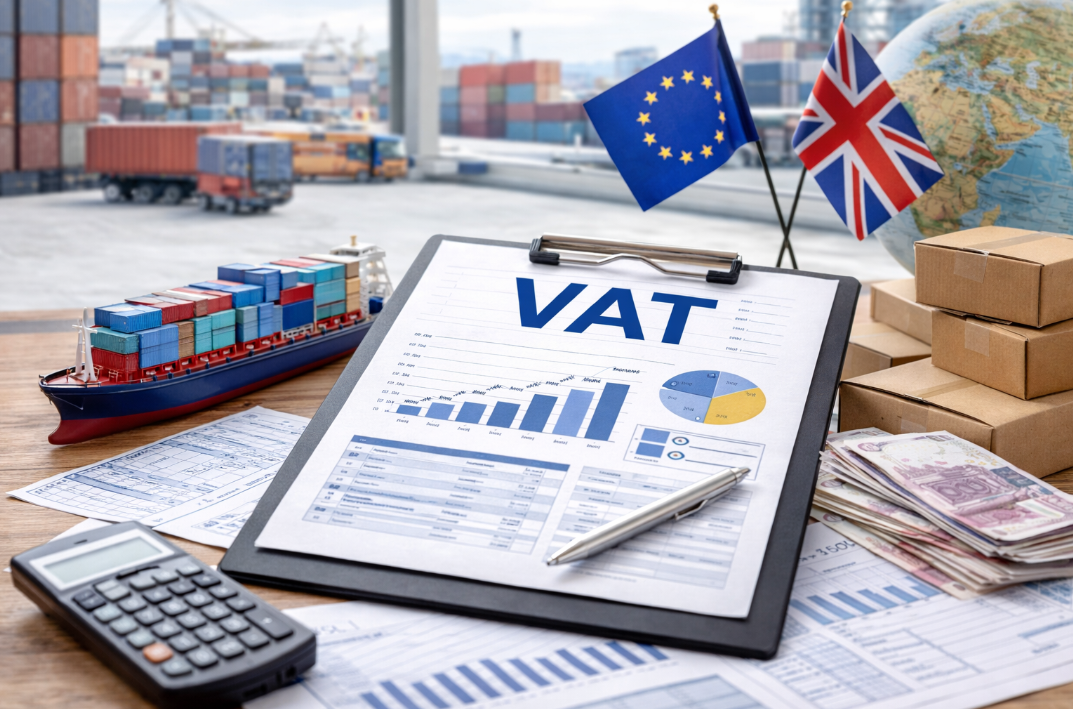
International transactions may involve import VAT, export evidence, postponed accounting or overseas obligations. Routine UK return support should not be confused with broad international tax representation.

VAT-registered businesses generally need to keep digital VAT records and file returns using compatible software. A spreadsheet may form part of the process when it is connected through an appropriate digital workflow.
Relevant VAT information is maintained within the agreed digital system.
Transactions are not left to default coding where the treatment needs review.
The software or bridging setup can communicate the return through the required digital process.
Technology does not replace checking the figures and underlying exceptions.
These issues should be investigated rather than corrected by automatically changing a figure without understanding the source.
Deposits, payment-provider deductions or timing differences may not have been recorded consistently.
The supporting invoice, business purpose or entitlement to recovery may be unclear.
Products or services may have different treatment, and default coding can conceal that difference.
Transactions outside the ordinary bank-feed workflow may not reach the VAT return correctly.
Unresolved control-account differences can affect several later VAT periods.
The size, cause, period and appropriate correction route should be considered first.
Outsourcing the return does not remove the need to issue correct invoices, retain evidence and explain unusual business activity.
Maintain complete sales, purchase and supporting records.
Prepare the agreed VAT work from the records supplied.
Explain unusual transactions and changes in business activity.
Raise unclear treatment and missing evidence as queries.
Review the draft return and approve it before submission.
Explain the main return result and complete agreed filing steps.
Arrange payment and keep records after filing.
Identify follow-up actions within the agreed service scope.
Review taxable turnover regularly, especially when sales are growing, the business model changes or a one-off contract may affect the rolling position. The current threshold and detailed rules should be checked at the time of the review.
Typical records include sales and purchase information, VAT invoices, bank and payment-platform activity, import or export evidence, credit notes and details of unusual transactions. The exact checklist depends on the business and VAT scheme.
No. Compatible software supports digital record keeping and submission, but it does not remove the need to apply the correct VAT treatment, maintain evidence and review unusual entries.
Yes, subject to agreeing the filing frequency, bookkeeping responsibilities, software access, review process and treatment of unusual transactions.
We can review the issue, affected period, available evidence and potential correction route. The appropriate action depends on the size and nature of the error and the rules applying at that time.
Those transactions can be reviewed within an agreed scope. Where a matter requires legal interpretation, overseas registration work, formal dispute representation or expertise outside the engagement, additional specialist advice may be needed.
Fees depend on filing frequency, transaction volume, bookkeeping quality, software setup, VAT schemes, sector complexity and whether registration, corrections or catch-up work are required. The proposed scope and fee should be confirmed before work begins.
Tell us whether you are registered, which software or records you use, the latest completed period and whether the concern relates to registration, a return, a scheme or an earlier error.