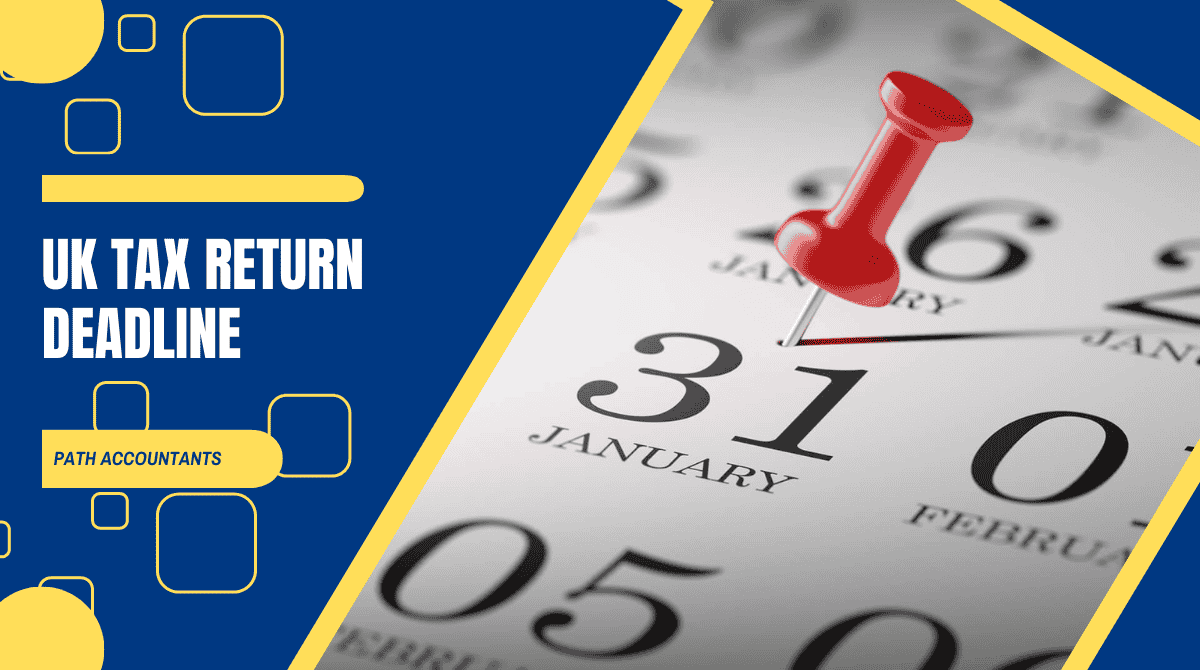
The main tax return deadline in the UK is 31 January 2027 for online Self Assessment returns covering the 2025/26 tax year. Any Self Assessment tax due for 2025/26 is generally payable by the same date.
There are several important dates before and after January, including the 5 October 2026 Self Assessment registration deadline, the 31 October 2026 paper tax return deadline, the 30 December 2026 PAYE coding deadline, and the 31 July 2027 second payment on account deadline.
If you are preparing a return for income earned between 6 April 2025 and 5 April 2026, these are the dates you need to know.
Important: The 31 January 2027 deadline relates to the 2025/26 tax year. A Self Assessment return covering the actual 2026/27 tax year, ending 5 April 2027, would normally have an online filing deadline of 31 January 2028.
For other business and personal tax dates throughout the year, see our HMRC tax deadline calendar.
Quick answer: next Self Assessment deadlines
| Deadline | What it is for |
|---|---|
| 5 October 2026 | Register for Self Assessment if required for the 2025/26 tax year |
| 31 October 2026 | Submit a 2025/26 paper Self Assessment tax return |
| 30 December 2026 | Submit online if you want eligible tax of less than £3,000 collected through PAYE |
| 31 January 2027 | Submit your 2025/26 online tax return |
| 31 January 2027 | Pay your 2025/26 balancing payment and, where applicable, first payment on account |
| 31 July 2027 | Make your second payment on account where required |
For most taxpayers filing online, 31 January 2027 is the date that matters most. However, waiting until January to start preparing the return can create problems if records are missing, figures need reconciling or you discover that you need additional information.
5 October 2026: Self Assessment registration deadline
If you need to complete a Self Assessment return for the 2025/26 tax year and have not already registered, you generally need to tell HMRC by 5 October 2026.
This can apply if, for example, you became self-employed, started receiving income that needs to be reported through Self Assessment or otherwise became liable to file.
HMRC states that you should tell them by 5 October if you need to complete a return for the previous tax year and either:
- you have not sent a Self Assessment return before; or
- you were registered previously but did not need to submit a return for 2024/25.
If you register after 5 October 2026, HMRC may provide a different filing deadline based on when they notify you. However, this does not necessarily move the tax payment deadline. Tax due for 2025/26 can still need to be paid by 31 January 2027.
If you have recently become a sole trader, getting registered early also gives you more time to organise your records and understand what income and expenses need to be reported.
31 October 2026: paper tax return deadline
If you are submitting a paper Self Assessment tax return for 2025/26, HMRC must normally receive it by 11:59pm on 31 October 2026.
This deadline is three months earlier than the online filing deadline.
If you miss the paper filing deadline, do not simply send a late paper return without checking your position. In many cases, filing online before the January deadline may be the better route.
Most taxpayers now complete their Self Assessment returns online, which provides additional time to prepare and submit the return.
30 December 2026: PAYE coding option
There is another useful Self Assessment deadline that is often overlooked.
If you owe less than £3,000 through Self Assessment and already pay tax through PAYE, HMRC may be able to collect the amount through your PAYE tax code instead of requiring it as a separate lump-sum payment.
To potentially use this option, your online tax return must normally be submitted by 11:59pm on 30 December 2026.
You must also meet HMRC’s other eligibility conditions. In particular:
- the Self Assessment amount owed must be less than £3,000;
- you must already pay tax through PAYE, such as through employment or a company pension; and
- there must be enough PAYE income for HMRC to collect the amount through your tax code.
Submitting before 30 December does not guarantee that coding will be possible, but missing the deadline means you will generally need to use another payment method.
31 January 2027: online tax return deadline
The main Self Assessment deadline for 2027 is 11:59pm on 31 January 2027.
This is the deadline for filing your 2025/26 online Self Assessment tax return.
The return covers income and gains arising during the tax year from 6 April 2025 to 5 April 2026.
Depending on your circumstances, the return can include:
- self-employment income;
- property and rental income;
- employment income that needs reporting;
- dividends and savings income;
- foreign income;
- capital gains;
- pension income;
- other untaxed income;
- tax reliefs and allowable expenses.
You do not need to wait until January to file. A 2025/26 return can be submitted after the tax year ends, once you have the information needed to prepare it accurately.
Filing earlier can also give you more time to understand the size of the tax bill rather than discovering the amount shortly before payment is due.
If you want professional support with the return, see our Self Assessment tax return accountant in London service.
31 January 2027: Self Assessment tax payment deadline
The filing deadline and payment deadline fall on the same date for most online Self Assessment taxpayers.
Any balancing payment for the 2025/26 tax year is normally due by 11:59pm on 31 January 2027.
You may also need to make your first payment on account for 2026/27 on the same date.
This means the amount payable in January can sometimes be significantly higher than the final tax balance for the year just ended.
For example, someone may need to pay:
2025/26 balancing payment
plus
first payment on account towards 2026/27
This is one reason it is useful to calculate your likely position well before January.
If you are self-employed and want an early indication of your Income Tax and National Insurance position, use our self-employed tax calculator.
31 July 2027: second payment on account deadline
If you are required to make payments on account, the second instalment for 2026/27 will normally be due by 31 July 2027.
Payments on account are advance payments towards your next Self Assessment bill.
Each payment is normally based on half of the relevant previous year’s tax liability, with:
- the first payment on account due 31 January 2027; and
- the second payment on account due 31 July 2027.
Payments on account are generally not required where your previous year’s relevant Self Assessment tax liability was less than £1,000, or where more than 80% of the tax was already collected outside Self Assessment, such as through PAYE.
If your income is expected to fall substantially, it may be possible to apply to reduce payments on account. The reduction needs to be reasonable because interest can become payable if the payments are reduced too far.
What documents should you prepare for your tax return?
A tax return can only be completed accurately when the underlying records are available.
The documents you need will depend on how you earn your income, but it is sensible to start collecting them well before the January tax return deadline.
If you are self-employed
You may need:
- sales and income records;
- customer invoices;
- business expense receipts;
- bank statements;
- records of business purchases;
- mileage or business travel records;
- equipment and asset purchase details;
- records of pension contributions;
- information about other personal income.
Accurate bookkeeping makes this process considerably easier. If your records are incomplete or several months behind, see our guide to bookkeeping for sole traders.
If you are employed
Relevant documents can include:
- P60;
- P45 if you changed or left employment;
- P11D for taxable benefits and expenses;
- details of employment expenses you intend to claim;
- information about additional income not already taxed correctly through PAYE.
If you are a landlord
You may need records showing:
- rental income received;
- property management costs;
- repairs and maintenance;
- insurance;
- professional fees;
- finance costs;
- other allowable property expenses.
Other information
Depending on your circumstances, you may also need:
- dividend statements;
- savings interest information;
- pension statements;
- foreign income records;
- capital gains calculations;
- Gift Aid contributions;
- pension contribution records;
- details of tax already paid.
You do not normally send all of these documents with the return, but you need sufficient records to support the figures you report.
What happens if you miss the tax return deadline?
Missing the 31 January 2027 tax return deadline can result in penalties even if you have no tax to pay.
For a late Self Assessment return, HMRC’s penalty system can include:
- an initial £100 late filing penalty;
- after three months, £10 daily penalties, up to a maximum of £900;
- after six months, a further penalty of 5% of the tax due or £300, whichever is greater;
- after twelve months, another tax-related penalty, with higher penalties possible in some circumstances.
Late payment is dealt with separately.
If tax remains unpaid, HMRC can charge late-payment penalties as well as interest on the outstanding amount.
This means there are two different issues to manage:
Late filing – submitting your return after the deadline.
Late payment – paying the amount due after the payment deadline.
Filing your tax return does not automatically solve a late-payment problem, and paying an estimated tax bill does not remove the obligation to file the return.
If you have missed a deadline already, dealing with the return quickly is generally better than allowing the delay to continue.
MTD vs Self Assessment: what changes in 2026/27?
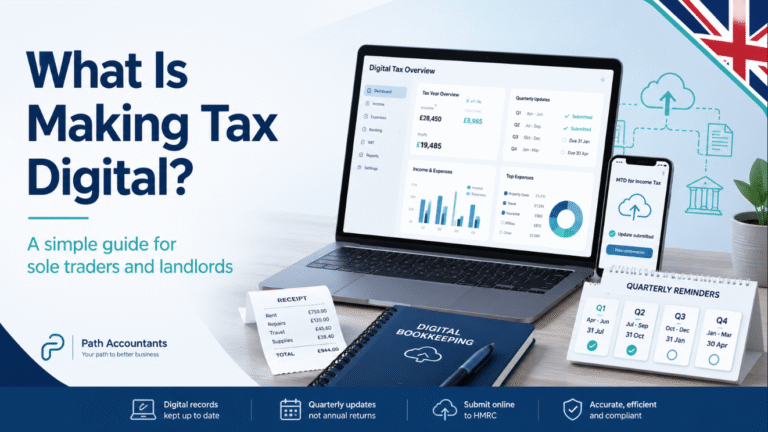
Making Tax Digital for Income Tax is now relevant to some sole traders and landlords, but it does not mean the 31 January tax return deadline has disappeared.
From 6 April 2026, eligible sole traders and landlords with qualifying annual income of more than £50,000 are required to use Making Tax Digital for Income Tax unless an exemption applies.
Under MTD, affected taxpayers use compatible software to:
- keep digital records of self-employment and property income and expenses;
- send quarterly updates to HMRC; and
- complete and submit their tax return using compatible software.
The quarterly updates are not separate tax returns.
There is also an important distinction for the January 2027 filing cycle.
If you began using MTD from 6 April 2026, you still need to submit your 2025/26 Self Assessment return in the normal way because that tax year ended before your mandatory MTD period began.
Your reporting for the 2026/27 tax year will then follow the MTD requirements where they apply to you.
From 6 April 2027, the mandatory MTD threshold is scheduled to extend to eligible sole traders and landlords with qualifying income above £30,000.
Read our full guide to Making Tax Digital for Income Tax if you are unsure whether the new rules apply to you.
Should you wait until January to prepare your tax return?
There is usually little advantage in deliberately leaving a complete return until the final weeks before 31 January.
Preparing earlier gives you time to:
- identify missing invoices or statements;
- reconcile bookkeeping records;
- review allowable expenses;
- correct errors before submission;
- calculate the likely tax bill;
- understand whether payments on account apply;
- plan how the tax will be paid.
It also gives you more time to raise questions if your circumstances changed during the year, such as starting or closing a business, acquiring rental property, receiving foreign income or disposing of an asset.
The deadline may be in January, but the preparation does not need to be.
Want your return reviewed before January gets busy?
Send us your current position and we’ll explain what records are still needed, which deadlines apply and what the filing work would involve.
FAQs
What is the tax return deadline in the UK?
For the 2025/26 tax year, the main online Self Assessment tax return deadline is 31 January 2027. Tax due through Self Assessment is also generally payable by this date.
When is the Self Assessment deadline in 2027?
The online Self Assessment deadline is 31 January 2027 for returns covering income from 6 April 2025 to 5 April 2026.
Is 31 January 2027 the deadline for the 2026/27 tax year?
No. This is an important distinction. 31 January 2027 is normally the online filing deadline for the 2025/26 tax year. A tax return covering the 2026/27 tax year, which ends on 5 April 2027, would normally be due online by 31 January 2028.
What is the 5 October Self Assessment registration deadline?
If you need to submit a return for 2025/26 and have not previously registered, or were previously registered but did not need to file for the preceding year, you may need to notify HMRC and register by 5 October 2026.
What is the paper tax return deadline?
The deadline for HMRC to receive most 2025/26 paper Self Assessment tax returns is 31 October 2026. Online returns normally have the later deadline of 31 January 2027.
Why is 30 December important for Self Assessment?
If you owe less than £3,000, already pay tax through PAYE and meet HMRC’s other conditions, you may be able to have your Self Assessment bill collected through your PAYE tax code. To use this option, an online return generally needs to be submitted by 30 December 2026.
When is Self Assessment tax due?
The balancing payment for the 2025/26 tax year is generally due by 31 January 2027. If payments on account apply, the first payment towards 2026/27 is normally due on the same date.
When is the payment on account deadline?
Payments on account normally have two deadlines: 31 January for the first payment; and 31 July for the second payment.
For the 2026/27 payment-on-account cycle, the relevant dates are therefore 31 January 2027 and 31 July 2027.
Do I have to file a tax return if I owe no tax?
If HMRC requires you to submit a Self Assessment return, you still need to file it by the applicable deadline even where the final calculation shows no tax is payable. A late return can result in a filing penalty regardless of whether tax is due.
Can I submit my tax return before January 2027?
Yes. You do not need to wait until January. A 2025/26 Self Assessment return can be prepared and submitted after the tax year ends on 5 April 2026, once you have the records needed to complete it accurately.
Does Making Tax Digital replace Self Assessment?
No. Making Tax Digital changes how affected sole traders and landlords keep records and report information to HMRC. Eligible taxpayers use compatible software, send quarterly updates and ultimately submit their tax return through the MTD process. The requirement to complete the year’s tax reporting and pay tax by the relevant Self Assessment deadlines remains.
Get expert help before your next tax deadline.
Path Accountants helps UK small businesses stay compliant, organised, and tax efficient.

Mohammad Hamza Pathan
ACA Chartered Accountant & Technical Reviewer
ICAEW verified practising certificateMohammad Hamza Pathan is an ICAEW Chartered Accountant and a director of Path Accountants. He reviews Path Accountants guides for technical accuracy, practical relevance and alignment with current UK accounting and tax requirements before publication or substantive updates.
Qualifications and experience
- ICAEW Chartered Accountant (ACA), admitted in 2020 and holder of an ICAEW practising certificate.
- Accountant at Path Accountants and a registered director of Path Accountants Ltd.
- Education listed as Cass Business School.
Professional review areas
- UK tax compliance
- Statutory and company accounts
- Self Assessment
- VAT and Making Tax Digital
- Bookkeeping and payroll
- Small-business accounting
Technical claims, UK terminology, key compliance points and whether the guidance clearly distinguishes general information from advice that depends on a reader's circumstances.