Author name: Hamza Pathan

Mohammad Hamza Pathan is an ICAEW Chartered Accountant and the founder and director of Path Accountants, based in London, United Kingdom. His articles aim to make accounting and tax topics clearer and more accessible.

Avatar photo
Small Business Accounting
UK Tax and Accounting

What Is Small Business Accounting and Why Does It Matter in the UK?

Small business accounting is the process of recording income, tracking expenses, managing taxes, and keeping financial records accurate so a business can operate legally and profitably. For UK small businesses, good accounting is not just about numbers. It affects cash flow, tax bills, growth decisions, and even whether the business survives long term. If you run a small business, accounting is not optional. It is the backbone of every financial decision you make. How small business accounting works? Small business accounting covers all the financial tasks needed to run a business in the UK while staying compliant with the rules set by HM Revenue and Customs. This includes. Unlike large companies, small businesses often manage these tasks with limited time and resources, which is why clear systems matter. Why small business accounting is so important Good small business accounting helps you. Without accurate records, you are guessing rather than managing. What small business accounting includes Bookkeeping Bookkeeping is the day to day recording of transactions. This includes sales, purchases, expenses, and payments. If bookkeeping is wrong, everything else is wrong. Learn more about professional bookkeeping for small businesses. Tax compliance and returns Small business accounting ensures you meet all tax obligations, including. Missing deadlines or submitting incorrect figures can lead to penalties. Keeping track of key dates using the HMRC tax deadline calendar can help. Cash flow management Accounting helps you track. This prevents situations where a business looks profitable on paper but struggles to pay expenses. Small business accounting for different business types Sole traders Sole traders must keep accurate records of income and expenses and submit a Self Assessment tax return each year. If you are new, registering early is essential. Limited companies Limited companies have stricter accounting requirements. These include. Accounting errors here can affect both the company and directors personally. Common small business accounting mistakes Good accounting systems prevent these issues before they cause damage. Do small businesses need an accountant Many small businesses start without an accountant, but most successful ones eventually use professional support. An accountant helps with. If you are searching locally, working with a small business accountant near you can provide tailored advice. Accounting software and small businesses Software helps with. However, software still requires correct setup and regular review to be effective. How Path Accountants supports small business accounting Path Accountants works with UK small businesses at every stage, from startups to growing companies. We support clients with bookkeeping, tax compliance, payroll, VAT, and long term financial planning. Our focus is on clear advice, accurate records, and helping business owners understand their numbers, not just file reports. If you want tailored support, you can book a free consultation. Conclusion Small business accounting is not just a legal requirement. It is a tool that helps you understand your business, protect your cash flow, and plan for the future. With the right systems and support in place, accounting becomes a strength rather than a burden, allowing you to focus on growing your business with confidence. FAQs
Tax Return Deadline
UK Tax and Accounting

UK Tax Return Deadlines 2026/27: Self Assessment Dates You Need to Know

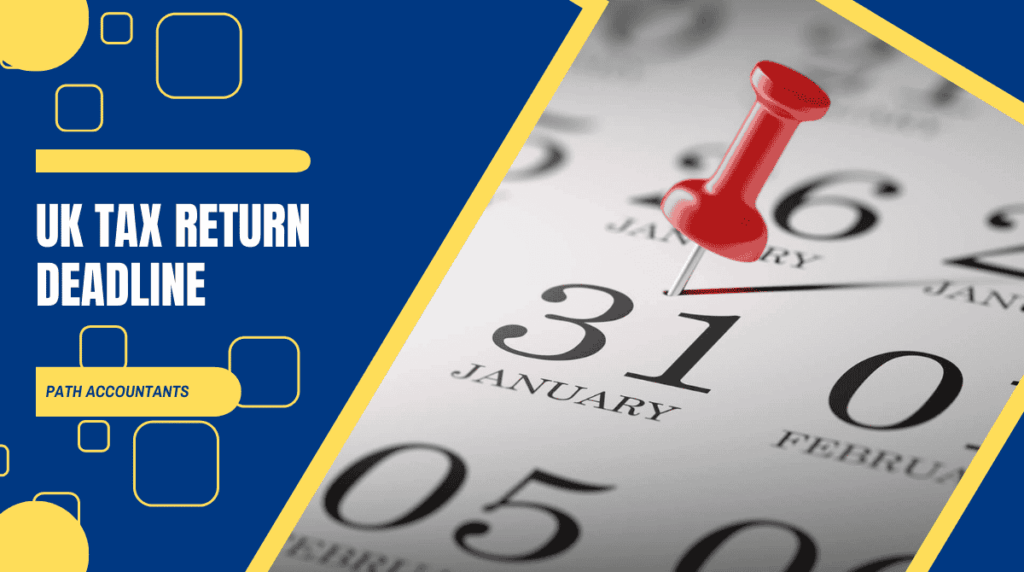
The main tax return deadline in the UK is 31 January 2027 for online Self Assessment returns covering the 2025/26 tax year. Any Self Assessment tax due for 2025/26 is generally payable by the same date. There are several important dates before and after January, including the 5 October 2026 Self Assessment registration deadline, the 31 October 2026 paper tax return deadline, the 30 December 2026 PAYE coding deadline, and the 31 July 2027 second payment on account deadline. If you are preparing a return for income earned between 6 April 2025 and 5 April 2026, these are the dates you need to know. Important: The 31 January 2027 deadline relates to the 2025/26 tax year. A Self Assessment return covering the actual 2026/27 tax year, ending 5 April 2027, would normally have an online filing deadline of 31 January 2028. For other business and personal tax dates throughout the year, see our HMRC tax deadline calendar. Quick answer: next Self Assessment deadlines Deadline What it is for 5 October 2026 Register for Self Assessment if required for the 2025/26 tax year 31 October 2026 Submit a 2025/26 paper Self Assessment tax return 30 December 2026 Submit online if you want eligible tax of less than £3,000 collected through PAYE 31 January 2027 Submit your 2025/26 online tax return 31 January 2027 Pay your 2025/26 balancing payment and, where applicable, first payment on account 31 July 2027 Make your second payment on account where required For most taxpayers filing online, 31 January 2027 is the date that matters most. However, waiting until January to start preparing the return can create problems if records are missing, figures need reconciling or you discover that you need additional information. 5 October 2026: Self Assessment registration deadline If you need to complete a Self Assessment return for the 2025/26 tax year and have not already registered, you generally need to tell HMRC by 5 October 2026. This can apply if, for example, you became self-employed, started receiving income that needs to be reported through Self Assessment or otherwise became liable to file. HMRC states that you should tell them by 5 October if you need to complete a return for the previous tax year and either: If you register after 5 October 2026, HMRC may provide a different filing deadline based on when they notify you. However, this does not necessarily move the tax payment deadline. Tax due for 2025/26 can still need to be paid by 31 January 2027. If you have recently become a sole trader, getting registered early also gives you more time to organise your records and understand what income and expenses need to be reported. 31 October 2026: paper tax return deadline If you are submitting a paper Self Assessment tax return for 2025/26, HMRC must normally receive it by 11:59pm on 31 October 2026. This deadline is three months earlier than the online filing deadline. If you miss the paper filing deadline, do not simply send a late paper return without checking your position. In many cases, filing online before the January deadline may be the better route. Most taxpayers now complete their Self Assessment returns online, which provides additional time to prepare and submit the return. 30 December 2026: PAYE coding option There is another useful Self Assessment deadline that is often overlooked. If you owe less than £3,000 through Self Assessment and already pay tax through PAYE, HMRC may be able to collect the amount through your PAYE tax code instead of requiring it as a separate lump-sum payment. To potentially use this option, your online tax return must normally be submitted by 11:59pm on 30 December 2026. You must also meet HMRC’s other eligibility conditions. In particular: Submitting before 30 December does not guarantee that coding will be possible, but missing the deadline means you will generally need to use another payment method. 31 January 2027: online tax return deadline The main Self Assessment deadline for 2027 is 11:59pm on 31 January 2027. This is the deadline for filing your 2025/26 online Self Assessment tax return. The return covers income and gains arising during the tax year from 6 April 2025 to 5 April 2026. Depending on your circumstances, the return can include: You do not need to wait until January to file. A 2025/26 return can be submitted after the tax year ends, once you have the information needed to prepare it accurately. Filing earlier can also give you more time to understand the size of the tax bill rather than discovering the amount shortly before payment is due. If you want professional support with the return, see our Self Assessment tax return accountant in London service. 31 January 2027: Self Assessment tax payment deadline The filing deadline and payment deadline fall on the same date for most online Self Assessment taxpayers. Any balancing payment for the 2025/26 tax year is normally due by 11:59pm on 31 January 2027. You may also need to make your first payment on account for 2026/27 on the same date. This means the amount payable in January can sometimes be significantly higher than the final tax balance for the year just ended. For example, someone may need to pay: 2025/26 balancing payment plus first payment on account towards 2026/27 This is one reason it is useful to calculate your likely position well before January. If you are self-employed and want an early indication of your Income Tax and National Insurance position, use our self-employed tax calculator. 31 July 2027: second payment on account deadline If you are required to make payments on account, the second instalment for 2026/27 will normally be due by 31 July 2027. Payments on account are advance payments towards your next Self Assessment bill. Each payment is normally based on half of the relevant previous year’s tax liability, with: Payments on account are generally not required where your previous year’s relevant Self Assessment tax liability was less than £1,000, or where more than

SA100 Deadline
Tax Forms

SA100 Tax Return Explained : Self Assessment Guide UK

SA100 is the core form used within the UK Self Assessment system run by HM Revenue and Customs. It acts as a summary of your personal tax return. When you complete SA100, you are declaring your income, confirming tax already paid, and allowing HMRC to calculate what is still due. If you have not yet registered, you must complete Self Assessment registration in the UK before filing your first return. SA100 itself does not list every detail. Instead, it works alongside additional pages depending on your situation. Who needs to complete an SA100 You are likely required to file SA100 if any of the following apply. Even if you are employed under PAYE, you may still need SA100. This is common where bonuses, benefits, or extra income are involved. If PAYE is unclear, it helps to understand what is PAYE. What information is reported on SA100 SA100 collects high level figures rather than line by line details. These figures are supported by records you keep. Common information included is. Supporting documents such as your P60 form or P45 are often needed to complete this accurately. SA100 supplementary pages explained Not everyone completes the same return. SA100 is combined with extra pages where required. Examples include. If you file online, the system shows only the sections relevant to you, reducing errors. How SA100 works in a real example James runs a small consultancy and earned £48,000 during the tax year. His allowable expenses were £9,000. On his SA100 return, James reports £39,000 as taxable profit. HMRC then calculates Income Tax and National Insurance. Any payments on account already made are deducted automatically. This is how SA100 converts your income into a final tax position. SA100 deadlines and penalties Missing deadlines is one of the biggest issues HMRC sees. Key dates to remember. You can track important dates using the HMRC tax deadline calendar. Late filing usually triggers an automatic £100 penalty, even if no tax is owed. How to submit SA100 online Most taxpayers submit SA100 online through HMRC. The process is straightforward. Once submitted, HMRC confirms your tax bill instantly. Common SA100 mistakes to avoid Errors often happen due to rushed filing or missing records. Typical mistakes include. Careful review before submission can prevent HMRC follow ups later. Do you need an accountant for SA100 If your income is simple, you may complete SA100 yourself. However, once you have multiple income sources or property income, professional support reduces risk. Working with a Self Assessment tax return accountant in London helps ensure accuracy, full use of allowances, and timely submission. How Path Accountants supports SA100 filings Path Accountants helps individuals and business owners complete SA100 returns accurately and on time. We review income sources, check expenses, apply reliefs correctly, and liaise with HMRC where required. Our focus is not just filing the return, but helping clients avoid penalties and overpaying tax year after year. If you want personalised guidance, you can book a free consultation. What happens after you submit SA100 After submission, HMRC processes your return and confirms one of three outcomes. Keep your records for at least five years in case HMRC asks questions later. Conclusion SA100 is the foundation of the UK Self Assessment system. When completed correctly, it helps HMRC assess your tax accurately and avoids unnecessary penalties. Whether you manage it yourself or get professional support, understanding SA100 puts you in control of your tax position and removes stress from filing season. FAQs

What is Council Tax Rebate
UK Tax and Benefits

Council Tax Rebate : Who Can Claim and How to Get Money Back

A council tax rebate is money paid back to you when you have overpaid council tax or when your circumstances mean you should have been paying less. Rebates are handled by your local council and can be paid as a refund or applied as credit against future bills. Many households qualify for a council tax rebate without realising it, especially after changes in income, household size, or property details. What a council tax rebate is A council tax rebate is a refund or adjustment made when your council reviews your account and confirms you have paid more than required. This often happens after a reassessment of your situation rather than an error on your part. Rebates are usually paid Because council tax is a household cost, it often interacts with other financial responsibilities such as benefits or housing related taxes. If you also receive support payments, our guide on tax credits explains how household changes are assessed more broadly. Why councils issue council tax rebates Councils issue rebates when they identify that your council tax liability has changed during the year. This can happen if These reassessments are similar to how HMRC reviews other household related taxes, such as when it issues HMRC savings tax letters after income changes. Who can qualify for a council tax rebate Eligibility depends on local council rules, but many people qualify due to everyday life changes. You may qualify if If your income recently changed because of employment or self employment, it is also worth understanding how councils assess financial information differently from HMRC. Our guide on what is an SA302 explains how income evidence is often used. Council tax rebate vs council tax reduction A council tax rebate and council tax reduction are often confused. A rebate applies to past overpayments. A reduction lowers future council tax bills based on income or circumstances. Some households receive a reduction going forward and a rebate for earlier payments at the same time. Council tax rebate for single person households If you are the only adult living in a property, you are usually entitled to a 25 percent discount. If this discount was not applied earlier, your council may refund the overpaid amount. This is one of the most common reasons people receive a council tax rebate, especially after separation, bereavement, or a child moving out. Council tax rebate due to incorrect banding Some properties are placed in the wrong council tax band. If your home is in a higher band than similar nearby properties, you may be paying more than necessary. If the band is corrected, you may This is similar to how property related taxes are reassessed in other areas, such as capital gains. If you own property beyond your main home, our guide on capital gains tax UK explains how property value changes are treated elsewhere in the tax system. How to claim a council tax rebate Most council tax rebate claims require you to contact your local council directly. The process usually involves If your rebate relates to income fluctuations across the year, this can overlap with how annual income is reviewed for tax purposes. Our article on UK tax brackets explains how income thresholds are assessed annually. How long council tax rebates take Processing times vary between councils. Straightforward cases may be resolved in a few weeks, while backdated claims or banding disputes can take longer. Once approved, rebates are usually paid using the same payment method you used for council tax. Common mistakes people make with council tax rebates Many people miss out because they assume everything is automatic. Common mistakes include This mirrors mistakes people make in other tax areas, such as failing to review documents like P45s after job changes. Our guide on what is a P45 explains why updates matter. Council tax rebate and wider financial planning A council tax rebate improves short term cash flow, but it often signals a wider financial change. Income drops, household changes, or benefit eligibility can affect multiple areas at once. If you run a business or work for yourself, these changes may also affect how you manage records. Our guide on small business bookkeeping explains why accurate records matter when circumstances shift. How Path Accountants can help At Path Accountants, we help clients understand how council tax rebates fit into their overall financial picture. While councils handle rebates directly, we help you identify eligibility issues, prepare supporting evidence, and ensure changes are reflected across your tax position. You can book a free consultation here. Conclusion A council tax rebate is often overlooked, yet it can result in meaningful money back when your circumstances change. Whether it comes from a single person discount, income reduction, or incorrect banding, the key is knowing when to act and who to contact. A quick review of your council tax position could uncover savings you were never meant to lose. FAQs

Get your SA302 tax calculation
Tax Forms

SA302 Explained : What It Is and Why Lenders Ask for It

An SA302 is a tax calculation document issued by HMRC that shows your income and tax position for a specific tax year. It is most commonly used as proof of income by mortgage lenders banks and financial institutions especially for self employed individuals and company directors. If you have been asked for an SA302 during a mortgage or loan application this is the document they are referring to. What an SA302 is An SA302 is an official summary of your self assessment tax return. It confirms the income you declared to HMRC and shows how your tax was calculated for that year. An SA302 includes It is generated after your tax return is submitted and processed. To understand how SA302 fits into the wider tax system you can also read our guide on income tax Why lenders ask for an SA302 Lenders rely on SA302s because they are based on HMRC records. For self employed individuals they provide a reliable picture of income over time rather than just recent bank statements. Most mortgage providers ask for These documents together confirm both income and tax payment history. Who needs an SA302 An SA302 is commonly required by Employees paid only through PAYE usually do not need an SA302 unless they also submit a self assessment return. If you are unsure whether you should be filing self assessment you can review What information an SA302 shows An SA302 provides a breakdown of income sources reported during the tax year. This may include Lenders often use this information to calculate average income across multiple years. SA302 and tax year overview explained An SA302 is often requested together with a tax year overview. The SA302 shows the tax calculation. The tax year overview confirms whether the tax due has been paid. Lenders usually want both to make sure there are no outstanding HMRC balances. HMRC guidance on tax year overviews How to get an SA302 from HMRC If you submit your tax return online you can download your SA302 from your HMRC account. The process usually involves If your accountant files on your behalf they can usually provide this document as well. Can an accountant provide an SA302 Yes. Accountants who submit tax returns using recognised software can generate SA302s. Many lenders accept these as long as they match HMRC records. However some lenders insist on HMRC generated versions so it is always best to check lender requirements in advance. SA302 for mortgages SA302s are most commonly requested for mortgage applications. Lenders use them to assess income stability and affordability. Typical mortgage requirements include If income fluctuates lenders may ask for explanations or supporting documents. SA302 for company directors Company directors often rely on SA302s even if they receive income through salary and dividends. The SA302 reflects total declared income which gives lenders a full picture. This is especially important where PAYE salary alone does not reflect true earnings. You can also read how PAYE interacts with self assessment Common problems with SA302 documents Many people experience delays because of issues with SA302s. Common problems include These issues are easier to resolve before applying for finance. How to avoid SA302 issues You can reduce delays by Preparation saves time and stress. Do PAYE workers need an SA302 Most PAYE employees do not need an SA302. However if you file a self assessment return for rental income freelance work or other income an SA302 may still be required. This often surprises employees with side income. How Path Accountants can help with SA302 documents At Path Accountants we help individuals obtain review and correct their SA302 documents so they are accepted by lenders without delays. We make sure your income figures are accurate tax is paid correctly and supporting documents are ready when needed. Our services include You can request a free consultation here Explore all services Conclusion An SA302 is a key document for anyone who files a self assessment tax return and needs to prove income. It shows exactly what you earned and how much tax you paid using HMRC approved calculations. Whether you are applying for a mortgage loan or financial product understanding SA302s helps you avoid delays and move forward with confidence. Keeping your tax records accurate ensures your SA302 works in your favour when it matters most. FAQs

Why i received HMRC Savings Tax Letter
UK Tax and Accounting

HMRC Savings Tax Letters : Why You Receive Them and What to Do Next

HMRC savings tax letters are notices sent by HMRC to tell you that you may have paid too much or too little tax on your savings interest. These letters usually arrive when banks or building societies report interest you earned and HMRC notices a difference between what tax was due and what was paid. Although they can feel worrying at first most savings tax letters are routine and easy to deal with once you understand them. What HMRC savings tax letters are HMRC savings tax letters are official letters explaining how your savings interest has been taxed. Since banks no longer deduct tax automatically HMRC now checks savings interest data itself and updates your tax record where needed. These letters usually explain They are not penalty notices and do not mean you have done anything wrong. You can also see how savings income fits into your wider tax position in our guide to UK income tax Why HMRC sends savings tax letters Banks and building societies report savings interest directly to HMRC. If this information does not match your PAYE or tax record HMRC sends a savings tax letter to correct the difference. Common reasons include This is why many people receive HMRC savings tax letters even when their finances seem straightforward. Official HMRC guidance on savings interest How savings interest is taxed in the UK Savings interest is taxed depending on your income tax band and your personal savings allowance. Most people have a tax free allowance Once you earn more than your allowance the extra interest becomes taxable. If you are unsure which tax band you fall into you can check our guide Types of HMRC savings tax letters you may receive Not all savings tax letters mean the same thing. HMRC uses different letters depending on your situation. You may receive a letter saying Some letters are for information only while others ask you to respond. What to do when you receive an HMRC savings tax letter Do not ignore the letter. Take a few minutes to review it carefully. You should If everything is correct HMRC will usually deal with it automatically. If something looks wrong you should contact HMRC. If the letter links to PAYE adjustments our guide on PAYE may help What happens if you owe tax on savings interest If HMRC says you owe tax there are usually two outcomes. For smaller amounts HMRC adjusts your tax code so the tax is collected gradually through PAYE.For larger amounts HMRC may ask for a direct payment or include it in self assessment. This is why many people see their tax code change after receiving a savings tax letter. You can also learn how HMRC handles underpaid tax in our guide What happens if you are due a refund If HMRC finds that you overpaid tax on savings interest they usually issue a refund automatically. Refunds may be In most cases you do not need to apply unless HMRC asks for confirmation. Do HMRC savings tax letters mean you need self assessment Not always. Many people assume they must file a tax return after receiving a savings tax letter but this is often not the case. You may need self assessment if Otherwise PAYE adjustments usually cover savings tax. If you are unsure you can review Common mistakes people make with savings tax letters People often panic or make avoidable mistakes. Common errors include A calm review usually prevents bigger problems later. How to reduce future HMRC savings tax letters You cannot always avoid savings tax letters but you can reduce how often they occur. Helpful steps include Better planning leads to fewer surprises. How Path Accountants can help with HMRC savings tax letters At Path Accountants we help individuals review HMRC savings tax letters check interest figures and correct tax codes where needed. We also advise on tax efficient saving so you minimise future issues. Our team can You can request a free consultation here View our full tax services Conclusion HMRC savings tax letters are usually routine checks rather than cause for concern. They exist to make sure the right amount of tax is paid on savings interest. By reviewing the figures responding on time and keeping your tax record up to date you can handle these letters with confidence. Understanding how savings tax works puts you in control and helps prevent repeat letters in the future. FAQs

Small Business Bookkeeping in Uk
UK Tax and Accounting

Small Business Bookkeeping : A Guide for UK

Small business bookkeeping is the process of recording organising and managing your business finances so you always know where your money is going. It tracks income expenses invoices bills and taxes and helps you stay compliant with HMRC. Good bookkeeping is not just about numbers. It gives you clarity control and confidence to make better business decisions. What small business bookkeeping means Small business bookkeeping means keeping accurate financial records of everything that moves in and out of your business. This includes sales purchases expenses payments and taxes. Bookkeeping creates the foundation for your accounts tax returns and cash flow planning. Without proper bookkeeping it becomes hard to know if your business is profitable or if you can afford to grow. Many small businesses struggle not because they lack customers but because they lose control of their finances. You can also see how bookkeeping fits into the wider tax picture in our guide to UK income tax Why bookkeeping matters for small businesses Bookkeeping keeps your business organised compliant and financially healthy. When bookkeeping is done properly you can Poor bookkeeping often leads to missed expenses late filings and unexpected tax bills. HMRC also legally requires businesses to keep accurate records What bookkeeping includes for a small business Small business bookkeeping usually includes These records support your annual accounts and self assessment filings.If you file tax returns you may also want to read Bookkeeping example for a small business Imagine a small marketing agency invoicing clients monthly while paying for software rent and freelancers. Without bookkeeping the owner relies on bank balance alone which gives a false picture. With proper bookkeeping the owner can clearly see This allows smarter pricing and better planning. Bookkeeping vs accounting Bookkeeping and accounting are often confused but they are not the same. Bookkeeping focuses on recording and organising financial data regularly.Accounting uses those records to analyse performance prepare accounts and submit tax returns. Bookkeeping comes first. Accounting relies on it. How often small business bookkeeping should be done For most small businesses bookkeeping should be done weekly. Businesses with higher transaction volumes may need daily updates. Leaving bookkeeping until year end often results in missing records errors and higher accounting fees. Common bookkeeping mistakes small businesses make Many small businesses make the same mistakes especially in the early stages. Common issues include These mistakes can lead to HMRC issues and inaccurate tax bills. Manual bookkeeping vs bookkeeping software Some small businesses still use spreadsheets. This can work briefly but becomes risky as the business grows. Bookkeeping software helps by HMRC guidance on digital record keeping Do small businesses need bookkeeping for HMRC Yes. HMRC requires accurate records for all businesses even if you make a loss. With Making Tax Digital rules digital bookkeeping is becoming essential especially for VAT registered businesses. Accurate bookkeeping ensures VAT registered businesses can also review When to outsource small business bookkeeping Many business owners start by doing bookkeeping themselves. Over time it often becomes overwhelming. Outsourcing bookkeeping makes sense when Professional bookkeeping frees you up to focus on growth. How bookkeeping helps small businesses grow Good bookkeeping supports growth by showing what is really happening in your business. It helps you Lenders and investors expect clean accurate records. Small business bookkeeping and tax planning Accurate bookkeeping allows proper tax planning. It helps you Poor bookkeeping almost always leads to rushed returns and missed savings. How Path Accountants support small business bookkeeping At Path Accountants we provide reliable bookkeeping services tailored to small businesses across the UK. We help sole traders limited companies and growing businesses keep accurate records stay compliant with HMRC and gain clear financial insight. Our bookkeeping support includes You can request a free consultation here Explore more services Conclusion Small business bookkeeping is not just an admin task. It is the backbone of a successful business. When your records are accurate and up to date you gain control clarity and confidence. Whether you manage bookkeeping yourself or outsource it the key is consistency. Strong bookkeeping today prevents problems tomorrow and gives your business the foundation it needs to grow. FAQs

How Capital Gains Tax UK Work?
UK Tax and Benefits

How Capital Gains Tax UK Work?

Capital gains tax in the UK is the tax you pay when you make a profit from selling or disposing of something that has increased in value. It applies to the gain not the full sale amount. Many people are unsure when capital gains tax applies or how much they will owe which leads to confusion and unexpected HMRC bills. Understanding how capital gains tax works helps you plan your sales correctly and avoid paying more than necessary. What capital gains tax UK means Capital gains tax also called CGT is a tax on the profit you make when you sell give away swap or dispose of an asset that has risen in value. You only pay tax on the gain which is the difference between what you paid and what you received. Common assets that may trigger capital gains tax For a full understanding of how income tax bands link with CGT you can also read our guide How capital gains tax is calculated To calculate your gain subtract the price you originally paid from the price you sold the asset for. You can deduct certain permitted costs including If your total gains exceed the annual allowance you must pay tax on the amount above it. Capital gains tax rates in the UK Your CGT rate depends on your income tax band and the type of asset sold. For most assets For residential property that is not your main home For a full breakdown of tax bands see. Capital gains tax on property CGT does not usually apply to your main home because it qualifies for private residence relief. But you may owe CGT if you dispose of Property CGT must be reported within sixty days using the HMRC online service. If you earn rental income you may also want to review. When capital gains tax does not apply You do not pay CGT on Gifts to spouses or civil partners are normally tax free. To understand how income interacts with these reliefs you can explore. Capital gains tax and spouses Married couples and civil partners can transfer assets between themselves without paying CGT. This helps with For more information about HMRC rules on benefits and allowances visit Reporting capital gains to HMRC You must report gains to HMRC if Ways to report More about self assessment:HMRC Self AssessmentHow to register for Self Assessment HMRC CGT reporting page Common mistakes people make with capital gains tax Typical errors include If you have workplace benefits or changes in income that may affect your tax position you can also review HMRC payroll checks. How to reduce your capital gains tax bill There are legal ways to lower your CGT bill. Use your annual allowanceEach individual has a yearly tax free CGT allowance. Split your disposalsSelling assets across different tax years works well for large gains. Transfer assets between spousesThis uses two allowances and may shift gains into a lower tax bracket. Offset your lossesYou can reduce your CGT by claiming allowable losses. Use tax free wrappersGains made inside ISAs and pensions are tax free. Check property tax rulesIf your main residence has periods of non occupancy study relief rules carefully on GOV UK. Path Accountants can help you plan your capital gains At Path Accountants we review your tax position help you calculate gains and guide you through reporting requirements so you never overpay HMRC. Whether you are selling property shares crypto or business assets our tax experts help you make informed decisions. You can request support here Explore related tax topics Conclusion Capital gains tax in the UK applies when you profit from selling or disposing of an asset. Although the rules seem complex the key is to know what counts as a gain how much tax you must pay and which reliefs can reduce your bill. With careful planning correct reporting and professional guidance you can manage CGT confidently and avoid unnecessary penalties. Staying informed ensures that when you sell an asset you do it in the most tax efficient way possible. FAQs

What is PAYE
UK Tax and Accounting

Understanding Pay As You Earn (PAYE) for Taxes

PAYE is the system HMRC uses to collect your income tax and National Insurance directly from your wages every time you get paid. Instead of receiving a large tax bill at the end of the year the tax you owe is taken from each payslip which makes your tax easier to manage and more predictable. What is PAYE? PAYE means Pay As You Earn. It is the method HMRC uses to take tax and National Insurance from your income before you receive your wages. Most employees in the UK pay their tax through PAYE which means your employer calculates the deductions and sends them to HMRC for you. If you want to understand your wider tax position you can also check our guide on income tax. How PAYE works for employees? Each time you are paid your employer checks your tax code and applies PAYE rules to calculate how much tax and National Insurance you owe. PAYE normally covers income tax National Insurance student loan repayments and some pension contributions. Your employer submits these details to HMRC through Real Time Information. You receive the remaining amount as take home pay. If you recently changed jobs and want to know how tax continues across employers you can read our guide what is a P45. Understanding your PAYE tax code Your tax code tells your employer how much tax free income you can have. A correct tax code means correct PAYE deductions. A wrong code can lead to overpayments or underpayments. Your code may change if What PAYE covers on your payslip? PAYE can include If you want to understand how tax is calculated across bands you can visit our guide on UK tax brackets. PAYE and Real Time Information Real Time Information is the reporting system that sends your payroll details to HMRC every time you are paid. It helps HMRC adjust tax codes quickly and identify errors during the year rather than waiting until the end. PAYE for people with more than one job If you have two jobs HMRC usually applies your tax free allowance to one employer. The second job often gets a basic rate or emergency code. If both jobs use the same allowance you can underpay tax without knowing. If this happens HMRC may correct it later and request the underpaid amount using self assessment. When PAYE leads to overpayments? You may overpay tax if HMRC usually refunds the extra amount automatically or updates your tax code. If you want to track tax adjustments you can explore our guide on tax credits and related tax support information. When PAYE leads to underpayments? You may underpay tax if HMRC may recover this by reducing your personal allowance or sending a payment request. Employer responsibilities under PAYE Employers must If employers make errors it can lead to emergency tax codes. You can learn how HMRC handles payroll investigations in our guide on HMRC wage raid payroll checks. PAYE for self employed workers Self employed individuals do not pay their main tax through PAYE. They use self assessment registration for their business income. However if they also have employment income PAYE will still apply to the employed part. PAYE and workplace benefits If you receive benefits like a company car or private medical insurance HMRC adjusts your tax code so the right amount of tax is taken through PAYE. Does PAYE remove the need for a tax return? PAYE covers your wages but not all types of income. You still need a tax return if you If you have rental income and want to avoid common tax mistakes you can read how to avoid paying tax on rental income. Path Accountants can help you understand PAYE We help employees sole traders landlords and directors understand their PAYE position and avoid overpaying tax. Our team reviews your tax code income sources and PAYE history to make sure everything is accurate. If you need support with refunds corrections self assessment or tax planning you can request a free consultation and our tax team will guide you step by step. You can also explore our full range of services on the services page and see local accountant support in London and other areas featured on the site. Conclusion PAYE is designed to make tax easier by collecting the right amount through each payslip. As long as your tax code is correct and your employer reports information properly you should pay the correct amount across the year. Understanding how PAYE works puts you in control so you can spot mistakes early avoid unexpected bills and make sure HMRC receives the right amount. Whether you have one job multiple jobs or self employed income PAYE remains one of the simplest ways to manage your tax. FAQs

40 Tax Threshold
UK Tax and Accounting

40 Tax Threshold Explained

The 40 tax threshold is the point where part of your income begins to be taxed at 40% instead of 20%. You do not pay 40% on your whole salary. Only the slice above this threshold is taxed at the higher rate. Many people move into this band without realising it especially when pay rises bonuses or side income stack up. Understanding how it works helps you plan ahead and avoid a surprise tax bill. What the 40 tax threshold actually means Your income is taxed in bands and each band has its own rate. The 40 tax threshold is simply the start of the higher rate band. You pay This explains why you never lose money by earning more. Only the income above each band is taxed at the relevant rate. For more about how bands work you can read our full guide on UK tax brackets explained. How income bands work around the 40 tax threshold For most people in England Wales and Northern Ireland Scotland uses different tax bands so the higher rate starts earlier there. If you want a clearer breakdown you may also find our guide on list of tax codes and what they mean helpful. When you start paying 40 tax You start paying 40% when your taxable income goes above £50,270 in the tax year. A common worry is that earning £1 over the threshold means you lose money. You never lose money. Only the part above the line is taxed at 40% while everything below is taxed at the lower rates. People often ask if a bonus or overtime can push them into 40%. The answer is yes. All taxable income counts. For more guidance on HMRC checks and tax behaviour you can read why HMRC issues savings warnings. Who the 40 tax threshold affects You do not need to be extremely high earning to fall into the higher rate band. It commonly affects More people enter the 40% band each year because the threshold has been frozen. Even modest pay rises push households into the higher rate. If you recently changed jobs or ended employment our guide what is a P45 can also help you understand how your income is tracked. What income counts toward the 40 tax threshold HMRC looks at your total taxable income including A person earning £48,000 in salary might feel safe but a £3,000 bonus or £2,000 rental profit can push them above the higher rate. If you earn rental income you may want to read how to avoid paying tax on rental income for more guidance. Real example of the 40 tax threshold Imagine Sam earns £55,000. Sam pays So only £4,730 is taxed at 40%. The rest stays in the lower bands. This is why crossing the line never means you lose money. Why the 40 tax threshold is pulling in more people The government has kept the thresholds frozen while salaries rise due to inflation and living costs. This pushes many ordinary earners into the higher rate even though their real standard of living has not improved. This effect is known as fiscal drag. If you want to understand how HMRC monitors compliance you can read our post on HMRC wage raid payroll checks. Hidden effects of crossing the 40 tax threshold Crossing into the higher rate band can trigger other financial effects. Child benefitOnce you or your partner earns above £50,000 you may need to repay part of your child benefit. You can learn more in our guide child benefit rules and payments. Personal allowance reductionAbove £100,000 your personal allowance begins to reduce and disappears at £125,140. Savings and dividendsHigher rate taxpayers have smaller allowances and pay higher tax on dividend income. Student loansHigher income increases loan repayments which raises your effective tax rate on each extra pound. Smart ways to manage your income around the 40 tax threshold There are legal and practical ways to reduce how much of your income falls into the higher rate band. Pension contributions Pension payments reduce your taxable income which can If your income is £55,000 and you contribute £5,000 to your pension your taxable income becomes £50,000 which lowers your tax. For more financial planning topics you can read our guide on SR1 form. Salary sacrifice and pay structure Some employers let you use salary sacrifice for pensions or benefits.Company directors can adjust the mix of salary and dividends.This can help keep income in lower tax bands. Gift Aid donations Gift Aid increases your basic rate band so more of your income is taxed at 20% rather than 40%. Timing income and expenses Self employed people and landlords can plan when they recognise income or expenses. This can reduce how much falls into the higher rate in certain years. Common mistakes people make around the 40 tax threshold Many people make the same errors A simple yearly review helps prevent most problems. Conclusion The 40 tax threshold can feel intimidating but once you understand that only the top slice of your income is taxed at 40% it becomes far easier to handle. With careful planning through pensions allowances timing and reliefs you can reduce the impact and keep more of what you earn. The key is tracking your income throughout the tax year instead of waiting for the deadline. Book a free meeting with our experts to sort out your taxes. FAQs

Scroll to Top