SA1 Form, What It Is and When You Need It
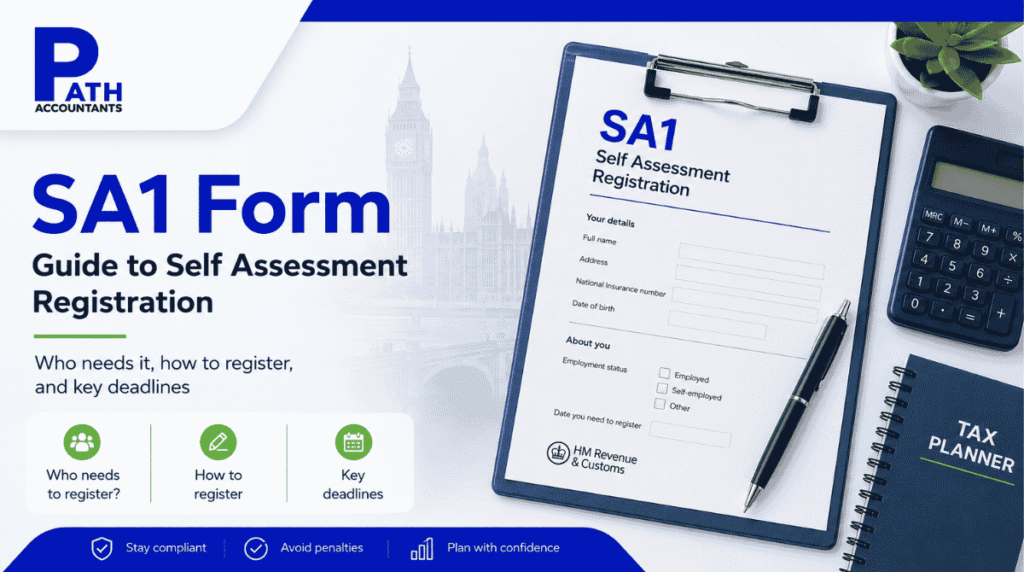
The SA1 form is used to register for Self Assessment when you need to send a tax return but you are not registering as self employed. You may need it if you have income or tax matters that HMRC cannot deal with through PAYE, such as: The SA1 form is not the tax return itself. It only tells HMRC that you need to be added to Self Assessment. After HMRC processes it, you usually receive a Unique Taxpayer Reference, often called a UTR. You then use that UTR to file your Self Assessment tax return. If you are still unsure whether you need Self Assessment first, read our simple guide on Self Assessment registration in the UK. What is an SA1 form The SA1 form is a registration form for people who need to join HMRC Self Assessment but are not registering as self employed. Many people first hear about it when something changes in their income. Maybe they start renting out a property. Maybe they receive income from abroad. Maybe they sell an asset and need to report a gain. Or maybe Child Benefit creates a tax charge because income has gone above the limit. In normal daily life, it can feel confusing because you may already pay tax through your job. Your employer takes tax through PAYE, so it feels like HMRC already knows everything. But PAYE only covers certain income. If you want to understand that better, our guide on what PAYE means explains it in plain English. The SA1 form helps HMRC open a Self Assessment record for you. It gives HMRC the basic details they need, such as: You can also check HMRC’s own page on registering for Self Assessment if you are not self employed. Why HMRC asks people to register HMRC does not always get a full picture of your income automatically. If you only have a regular job, your tax may be simple. Your employer sends payroll details to HMRC and deducts tax before paying you. But other income can sit outside that system. For example: This is where Self Assessment comes in. You tell HMRC about the income or charge, then file a tax return for the relevant tax year. For a wider overview, you can read our guide on HMRC Self Assessment. Who normally needs an SA1 form You may need an SA1 form if you are not self employed but still need to send a Self Assessment tax return. Common examples include: Let’s make this more real. A person with a full time job starts renting out a flat. Their salary is taxed through PAYE, but the rental income is separate. In that case, they may need to register for Self Assessment. A parent earns over the Child Benefit income limit and needs to pay the High Income Child Benefit Charge. They may also need Self Assessment, depending on their situation. You can read more in our guide on Child Benefit in the UK. Someone sells shares, crypto, or a second home and has a taxable gain. They may need to report it. Our guide on Capital Gains Tax in the UK covers this in more detail. When you should not use it The SA1 form is not the right route for every person. You normally should not use it if you are registering as self employed for the first time. If you have started a trade, freelance work, consulting, delivery work, tutoring, marketing work, design work, or any other business activity, you may need to register as self employed instead. That route is different because HMRC also needs details about your trade and National Insurance. You should also be careful if you had a UTR before. A UTR is your Unique Taxpayer Reference. If you filed a tax return years ago and then stopped, HMRC may still have your old Self Assessment record. In that case, you may need to reactivate your account rather than create a fresh one. A duplicate record can cause problems, such as: If you are starting a business and do not know whether to operate as a sole trader or company, our guide on sole trader vs limited company may help. SA1 form and landlords Landlords are one of the most common groups who need to understand this form. You may have a job and only rent out one property. You may not think of yourself as running a business. Still, HMRC may expect the rental income to be reported through Self Assessment. This can apply even if: Rental income rules can feel simple at first, but the tax position needs care. Expenses, mortgage interest, repairs, service charges, letting agent fees, and allowances all need to be handled properly. For more detail, read our guide on how to avoid paying too much tax on rental income. SA1 form and the High Income Child Benefit Charge The High Income Child Benefit Charge catches many families by surprise. You may need to deal with it if: Many people only find out after HMRC sends a letter. Others realise when checking their income near the end of the tax year. The main point is this. Child Benefit itself is not always the problem. The issue is whether income creates a tax charge that needs reporting. If this applies to you, do not ignore it. HMRC can charge penalties if you should have registered and filed but did not. SA1 form and Capital Gains Tax You may also need the SA1 form if you have a capital gain to report. This can happen when you sell or dispose of: Not every sale creates tax. You may have an allowance, relief, or no taxable gain at all. But if a gain is reportable, Self Assessment may be needed. It is also important to remember that some property disposals have separate reporting rules and shorter deadlines. So do not wait until January if you have sold a property. For help with this topic, see our full guide on