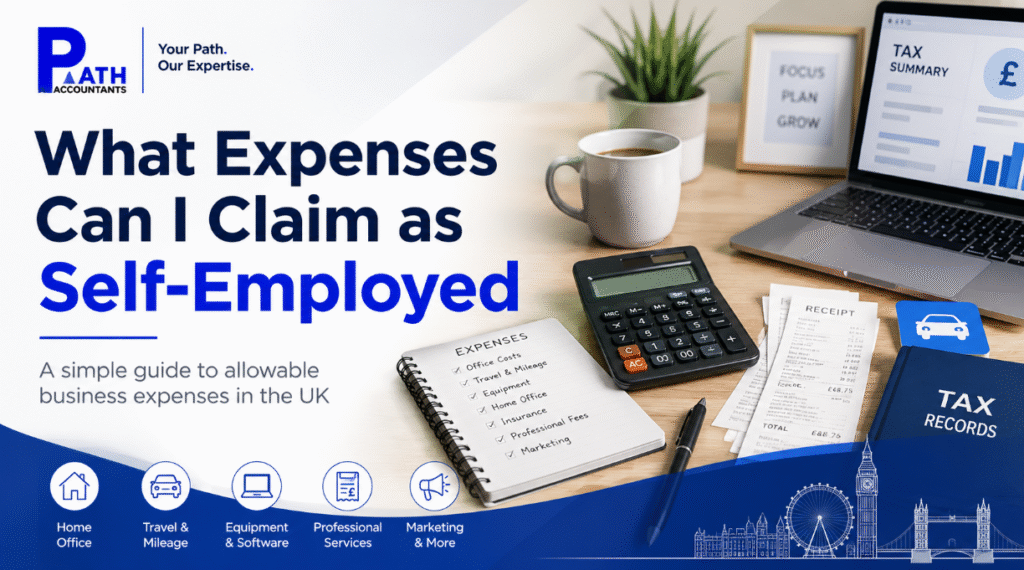
What Expenses Can I Claim as Self-Employed in the UK
If you work for yourself, you probably spend money on things that help you do the job. That could be a laptop, phone bill, fuel, software, tools, insurance or even part of your household bills. The important question is what expenses can I claim as self-employed without making an incorrect claim. In most cases, you can claim costs that are genuinely linked to running your business. HMRC calls these allowable expenses. They reduce your taxable profit, which can reduce the Income Tax you pay. This guide explains what normally counts, what does not count and how to deal with costs that are partly personal. What expenses can I claim as self-employed You can usually claim the business part of costs such as You cannot simply claim every payment made from your business bank account. The cost must relate to your trade and you need a sensible record showing what you paid for. You can check the full list in the official HMRC guide to self employed expenses. How allowable expenses reduce your tax Allowable expenses reduce your profit rather than reducing your tax bill pound for pound. Imagine that your business has Your tax calculation starts with the £36,000 profit rather than the full £48,000 turnover. Other factors, including your Personal Allowance, National Insurance and any other income, then affect the final amount you pay. It also helps to understand the difference between money coming into the business and the profit left after costs. Our guide to turnover and revenue explains these terms in simple language. Three checks to make before claiming an expense Before adding a cost to your accounts, ask yourself three questions. Was the cost for the business The expense should have a clear connection to the work you carry out. A web designer buying design software has an obvious business reason. The same person buying a family television does not, even if they occasionally view a client website on it. Was there any personal use You can normally claim only the business part of a mixed cost. Suppose your annual phone bill is £720 and you reasonably estimate that 65 per cent of the use was for business. Your claim would be based on the business share rather than the full bill. Your method does not need to be complicated, but it should be fair and consistent. Can you support the amount Keep a receipt, invoice, bank record, mileage log or another form of evidence. A card payment on a bank statement may show that money left your account, but it may not explain what you bought. Save the invoice as well where possible. Can I claim office costs and business equipment Common office expenses can include You may also be able to claim equipment such as computers, printers, cameras, machinery and tools. The way you claim larger items can depend on your accounting method. Under cash basis accounting, most equipment is normally recorded as an expense when paid for. Cars are treated differently. Under traditional accounting, equipment may need to be claimed through capital allowances. This is one reason accurate bookkeeping for sole traders matters. A valid cost can still cause confusion when it is placed in the wrong category. Can I claim my phone, internet and software Yes, but you should separate business use from personal use where the same service covers both. You may be able to claim the business share of A separate business phone contract is easier to track than one shared bill. If you use a personal plan, choose a reasonable method to calculate the work related amount. You could review your calls, data use or working pattern to arrive at a sensible percentage. Software can easily become a forgotten expense because small monthly payments leave through several different platforms. Review your bank statements and app subscriptions regularly. You may also find our guide to the best accounting software for a sole trader helpful. What can I claim when working from home When people ask what expenses can I claim as self-employed, household bills are often the most confusing part. You may use either actual costs or simplified expenses. Claiming a share of actual household costs You may be able to claim a reasonable business share of You cannot normally claim your full household bills just because you answer emails at home. A reasonable calculation may consider For example, you use one room out of five for work. You work there four days a week, and your family also uses the room during evenings and weekends. Claiming one fifth of every household bill would probably ignore the personal use. A time adjustment may be needed. Avoid treating a room as permanently used only for business without getting advice. Exclusive business use can create other tax issues when you later sell the home. Using simplified home working expenses Sole traders can use monthly flat rates when they work from home for at least 25 hours a month. The current rates are These rates do not include phone and internet costs. You can still work out and claim the business part of those bills separately. The HMRC working from home guidance explains the flat rate method. The easiest method is not always the method that gives the best result. Compare the flat rate with your genuine household costs before deciding. Can I claim travel and mileage You can normally claim travel that is necessary for the business. This may include trips to Allowable travel costs may include You cannot claim private journeys, fines or ordinary travel between your home and a permanent workplace. Simplified mileage rates for 2026 to 2027 For cars and goods vehicles, the rates are For motorcycles, the rate is 24p per business mile. These rates apply for the 2026 to 2027 tax year. HMRC increased the first rate from 45p to 55p with effect from 6 April 2026. Once you use simplified mileage for a vehicle, you normally need to continue using that method for the same