Author name: Hamza Pathan

Mohammad Hamza Pathan is an ICAEW Chartered Accountant and the founder and director of Path Accountants, based in London, United Kingdom. His articles aim to make accounting and tax topics clearer and more accessible.

Avatar photo
outsource finance function
Business Advisory

When Should a Business Outsource Its Finance Function? 9 Signs You’ve Outgrown Your Current Setup

Growing businesses rarely outgrow their finance setup overnight. More often, reporting gets slower, cash-flow decisions become harder and finance responsibilities remain spread between the founder, bookkeeper and accountant. This guide explains nine signs that the business may now need a wider finance function and how to decide whether to hire internally or outsource it. When to outsource finance function A business should consider outsourcing finance function when its existing accounting setup can no longer provide the financial information, controls and day-to-day support management needs to run the company confidently. That does not necessarily mean the bookkeeping is wrong. It may simply mean the business has moved beyond bookkeeping alone. Typical warning signs include: The right time to outsource accounting therefore depends less on turnover and more on whether your finance capability has kept pace with the business. Bookkeeping vs a finance function: what is the difference? The distinction matters because many growing businesses initially assume that better bookkeeping will solve every finance problem. It will not. Bookkeeping records what has happened. A wider finance function records, controls, closes, reports, forecasts and helps management understand what needs to happen next. Good bookkeeping is the foundation. Transactions need to be recorded correctly, bank accounts reconciled and financial records maintained consistently. If that foundation is weak, everything above it becomes less reliable. You can read more about Path’s bookkeeping services if getting the underlying records under control is the immediate problem. But a growing finance function goes further. It may include: For businesses that need several of these capabilities working together, a complete outsourced finance function can provide a more joined-up approach than adding separate providers whenever a new finance problem appears. 9 signs you’ve outgrown your current finance setup You do not need to experience all nine problems before making a change. One serious bottleneck may be enough. More commonly, several smaller issues begin appearing at the same time. 1. Your monthly numbers arrive too late A month-end report has limited management value if it arrives when the business is already well into the following month. Imagine a digital agency that has a strong month for sales but discovers six weeks later that subcontractor costs and project overruns significantly reduced its margin. The information may be technically accurate, but it arrived too late. By then, the agency may already have: As businesses become more complex, financial reporting needs to move closer to the decisions being made. That may mean introducing a proper month-end process and regular management accounts rather than relying almost entirely on annual statutory accounts. 2. You manage cash flow from the bank balance Your bank balance tells you how much cash you have today. It does not automatically tell you what your cash position will look like after the next payroll run, VAT payment, supplier batch, tax liability and several slow-paying customers. Consider a recruitment business with £120,000 in the bank. On the surface, cash looks healthy. But the company may also have: The important question is not simply “How much money is in the bank?” It is: “What will happen to cash over the coming weeks and months if our current assumptions are correct?” Once those questions become important, the business needs cash-flow reporting and forecasting rather than balance checking. 3. You don’t know profitability by client, service or project Revenue growth can hide weak margins. A consultancy might know that it generated £150,000 during a quarter but still be unable to answer: This becomes especially important where different services require different levels of staff time, subcontractor cost, software or materials. A business can grow revenue while accidentally concentrating growth in its least profitable work. The finance setup therefore needs to move beyond producing a total profit figure and start giving management information that reflects how the business actually operates. 4. The founder still handles finance administration In many small companies, finance starts with the founder. They raise invoices, approve bills, chase customers, send payroll information, check the bank and answer the accountant’s questions. That is understandable when the company is small. It becomes a problem when the same founder is also responsible for sales, recruitment, customer relationships and strategy. For example, the owner of a growing professional services company may spend every Friday afternoon: None of those tasks is individually enormous. Together, however, they can consume a significant part of the owner’s working week. Outsourcing finance can create clearer ownership of routine financial processes while allowing the founder to retain approval over the decisions that actually require their involvement. 5. Payroll, VAT and bookkeeping are disconnected Finance problems often appear between processes rather than inside them. The bookkeeper may maintain one set of records. Payroll may be processed separately. VAT information may be reviewed quarterly. Management reporting may happen somewhere else again. Each individual task can appear to be working while the overall finance process remains fragmented. For example, payroll changes may not be reflected in reporting quickly enough. VAT treatment may need correcting because the bookkeeping records were incomplete. Reimbursements may be processed without a consistent approval process. As employee numbers and transaction volumes increase, those gaps become harder to manage informally. A connected finance function should define: Businesses with growing teams may also need more structured payroll services rather than treating payroll as an isolated monthly task. 6. Debtors are growing without proper credit control An increasing sales ledger can look like growth. It can also become a cash-flow problem. Suppose a B2B company increases monthly sales from £80,000 to £120,000. That sounds positive. But if customers start paying later and outstanding debtors increase from £70,000 to £180,000, the business may find itself funding that growth from its own cash. The founder may know that several invoices are overdue but have no consistent process for: At that point, credit control is no longer simply an administrative nuisance. It is part of working-capital management. A wider finance function can create a repeatable process around invoicing, debtor reporting and collections. 7. Hiring decisions happen without financial
How to choose a construction accountant
Construction Accounting

How to Choose a Construction Accountant: 12 Questions UK Construction Businesses Should Ask

Choosing an accountant for a construction business is not quite the same as choosing an accountant for a typical small company. Construction businesses can have CIS deductions going in both directions, subcontractor verification, Domestic Reverse Charge VAT, payroll, materials, retention payments, multiple live projects and margins that can change quickly when labour or material costs move. A general accountant may be perfectly capable of preparing annual accounts. The more important question is whether they understand how a construction business operates throughout the year. If you are trying to work out how to choose a construction accountant, these 12 questions will help you compare firms properly before handing over your bookkeeping, tax and financial records. What should you look for in a construction accountant? Look for an accountant who regularly works with construction businesses and can deal confidently with CIS, Domestic Reverse Charge VAT, subcontractors, payroll, construction bookkeeping and project-level cost reporting. Do not choose solely on the lowest monthly fee. Ask exactly what is included, how often your accounts will be reviewed, what reporting you will receive and whether the accountant can continue supporting you as your business grows. Why choosing the right construction accountant matters Construction accounting becomes complicated because several accounting processes can affect the same transaction. A subcontractor invoice, for example, may involve: If these processes are handled separately, mistakes can become difficult to identify. The right construction accountants should understand how these pieces connect rather than looking at each tax or bookkeeping issue in isolation. Here are the questions worth asking before appointing one. 1. Do you regularly work with construction businesses? Start with the most basic question. Ask how many construction businesses the accountant already works with and what types of businesses they support. There can be a significant difference between accounting for a local builder, a subcontractor working for several principal contractors, a growing construction limited company and a property developer running several projects. You want evidence that the accountant understands the commercial realities of construction, not simply that CIS appears somewhere on their website. Ask whether they regularly work with: A construction-focused accountant should already understand the terminology and common accounting problems you are describing. For example, if you run a building company, ask about their experience working with accountants for builders. If most of your income comes from contracting for other firms, experience with accountants for subcontractors may be more relevant. What you want to hear: specific examples of the types of construction businesses they support and the accounting processes they manage for them. 2. Can you manage both sides of CIS? This question quickly separates basic CIS knowledge from practical construction accounting experience. A construction business can be a contractor, a subcontractor or sometimes both. If you pay subcontractors, your accountant may need to help with: At the same time, your own customers may be deducting CIS from payments made to your company. Your accountant therefore needs to understand CIS deducted from subcontractors you pay and CIS suffered on income you receive. If they only discuss filing the monthly contractor return, ask what happens to CIS deductions made from your company’s own invoices. Good construction accounting should follow the entire CIS position. You can read more about how CIS returns work and how they fit into ongoing construction accounting. What you want to hear: a clear explanation of how they handle CIS as both contractor and subcontractor where relevant. 3. Do you understand CIS materials and deductions? CIS is not simply a case of deducting 20% from every invoice. The calculation can depend on how the invoice is structured and whether qualifying material costs have been incurred directly by the subcontractor. This matters because incorrect treatment of materials can lead to too much or too little CIS being deducted. Ask the accountant how they would review an invoice containing: They should be able to explain which parts may need to be excluded before the CIS deduction is calculated and why evidence supporting material costs matters. An accountant who regularly handles construction clients should also be comfortable identifying situations where material figures look inconsistent or have been recorded incorrectly. Our guide to CIS deductions explains the deduction rates, materials treatment and payment statements in more detail. What you want to hear: more than “CIS is normally 20%”. They should understand how the deduction itself is calculated. 4. Can you handle Domestic Reverse Charge VAT? VAT is another area where construction businesses need sector-specific knowledge. The Domestic Reverse Charge can apply to certain building and construction services where the required conditions are met. Instead of simply charging and collecting VAT in the normal way, the customer accounts for the VAT under the reverse charge. Whether the reverse charge applies can depend on factors including: Ask your prospective accountant what process they use for determining the VAT treatment of construction invoices. They should also understand how VAT interacts with your accounting software and bookkeeping rather than waiting until the VAT return is due to investigate transactions. What you want to hear: a practical process for reviewing invoices and VAT treatment, not simply confirmation that they have heard of the reverse charge. 5. How do you manage construction bookkeeping? Good construction bookkeeping should tell you more than your bank balance. A construction business may have labour, materials, subcontractors, equipment, professional fees and other costs spread across several projects at the same time. If everything is entered into broad accounting categories without proper structure, your year-end accounts might still be completed, but you may have very little idea which projects actually made money. Ask how the accountant would structure your bookkeeping. Questions worth asking include: Our construction bookkeeping service is designed around the financial workflow of construction businesses rather than treating bookkeeping purely as data entry. What you want to hear: bookkeeping processes that support project visibility and tax compliance throughout the year. 6. Can you track costs by project? This may be one of the most valuable questions on the list. Knowing that your

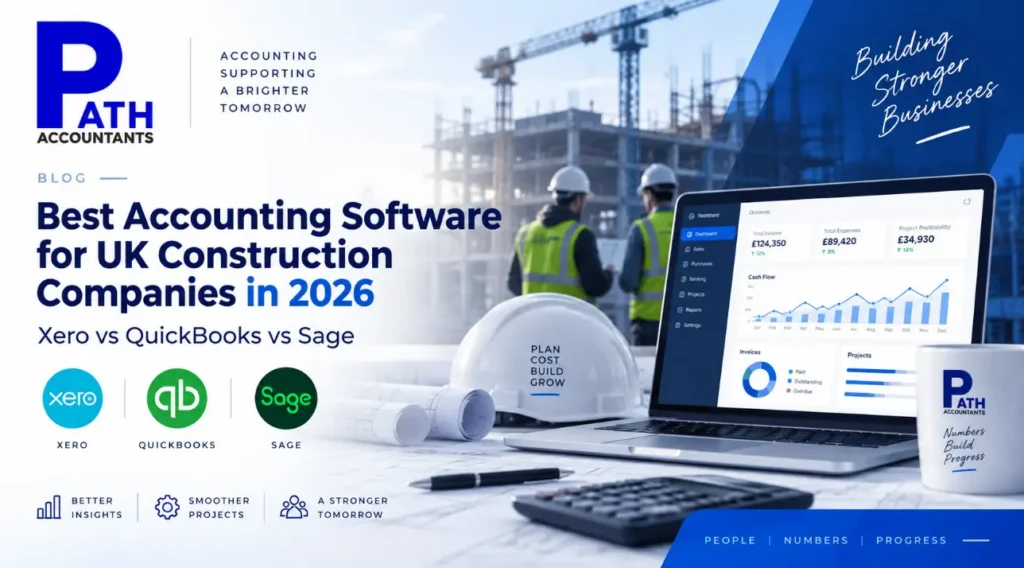
Path Accountants banner comparing the best construction accounting software UK for 2026, including Xero, QuickBooks and Sage.
Construction Accounting

Best Accounting Software for UK Construction Companies in 2026

Choosing accounting software for a construction business is not quite the same as choosing software for a normal small company. A builder can have £100,000 moving through the bank and still have very little idea which job actually made money. A contractor may need to verify subcontractors, deduct CIS, issue payment and deduction statements and submit monthly returns. Add Domestic Reverse Charge VAT, payroll, materials, plant hire and several live projects, and ordinary bookkeeping software can quickly be pushed beyond basic invoicing and bank reconciliation. So when we looked at the best construction accounting software in the UK, we did not simply compare dashboards, mobile apps or how attractive the invoice templates look. We looked at the accounting problems we would actually expect a construction business to manage: That produces a rather different shortlist. Quick verdict: which construction accounting software is best in 2026? For most small and growing UK construction businesses, Xero is our best overall choice. It gives you strong day-to-day bookkeeping, VAT, CIS functionality and a large accountant ecosystem, with project costing available when you need more visibility by job. QuickBooks Online is a very close alternative, particularly for builders and smaller contractors who want CIS calculations and direct CIS submissions without having to build a complicated system around them. FreeAgent makes the most sense for many smaller CIS subcontractors, particularly where the business needs straightforward invoicing, expenses, CIS deductions and basic project profitability rather than sophisticated contractor accounting. For larger contractors, groups and developers, Sage becomes much more interesting, particularly Sage Intacct Construction. Its construction offering goes significantly further into committed costs, project accounting, WIP and multi-entity reporting. Our 2026 picks Requirement Our pick Why Best overall Xero Strong combination of CIS, VAT, bookkeeping, accountant access and project tracking Best for small builders QuickBooks Online Straightforward CIS, VAT, expenses and project profitability Best for CIS subcontractors FreeAgent Simple CIS invoicing and deduction tracking for smaller businesses Best for larger contractors Sage Intacct Construction Stronger WIP, committed costs, project reporting and multi-entity accounting Best for advanced job costing Construction-specific software Better control of retentions, valuations, cost codes, committed costs and contract reporting There is an important caveat. The “best” software depends heavily on whether you are a self-employed subcontractor turning over £80,000, a building company with six employees and ten subcontractors, or a contractor running several multi-million-pound projects at once. Those businesses should not be using the same accounting setup. Xero vs QuickBooks vs Sage vs FreeAgent for construction Here is how we would compare the main options from a construction accounting perspective rather than a generic small-business perspective. Comparison based on UK functionality available in September 2026. Software features and plan structures can change. Feature Xero QuickBooks Sage FreeAgent Construction-specific systems CIS support Very good Very good Very good Good, especially for subcontractors Usually very good Direct contractor CIS filing Yes, with contractor CIS functionality Yes Available No, CIS300 filed externally Depends on system Domestic Reverse Charge VAT Yes Yes Yes Yes, but some scenarios need more care Usually supported/integrated Job costing Good Good Basic to excellent depending on Sage product Basic Excellent Subcontractor records Good Good Good Good Usually excellent Payroll Available Available Available Available Often integrated MTD Yes Yes Yes Yes Usually through accounting integration Project profitability Good Good Strong in higher-level products Basic to good Strong Committed costs/WIP Limited compared with construction ERP Limited compared with construction ERP Strong with Intacct Construction Limited Usually strong Retentions/valuations Usually needs another process or app Usually needs another process or app Better through construction products/integrations Limited Usually strong Bank reconciliation Excellent Very good Very good Very good Depends on accounting integration Accountant access Excellent Excellent Excellent Excellent Depends on setup Ease of use Very good Very good Moderate Very good More training normally required Best fit Small/growing construction SMEs Builders and smaller contractors Growing and larger contractors Sole traders and small subcontractors Complex contractors The first four platforms can all work perfectly well in the right business. The mistake is expecting general accounting software to behave like a full construction ERP system. What construction companies actually need from accounting software Construction bookkeeping becomes complicated because several accounting systems effectively overlap. You may have ordinary supplier bills and customer invoices, but you can also have CIS deductions, VAT reverse charge transactions, subcontractor statements, labour costs, materials attributable to different jobs and payments arriving at different stages of a contract. For contractors, CIS adds another recurring compliance process. HMRC requires contractors to report payments made to subcontractors through monthly CIS returns. A significant 2026 change is that from 6 April 2026, the requirement for mainstream contractors to submit nil returns was reinstated where no subcontractor payments have been made, unless an appropriate inactivity notification is made. That makes reliable CIS records inside the accounting process even more important. CIS needs to connect with the bookkeeping Good CIS accounting software should make it easy to distinguish labour from qualifying materials, use the appropriate deduction rate and keep the subcontractor payment records consistent with the monthly return. The usual deduction rates include 20% for registered subcontractors, 30% where the higher rate applies and 0% where HMRC confirms gross payment status. If you want to understand the underlying calculation rather than relying entirely on the software, read our guide to CIS deductions. Contractors filing every month can also see our guide to CIS returns. Domestic Reverse Charge VAT cannot be ignored VAT is another reason we would not choose construction accounting software solely on price. HMRC’s Domestic Reverse Charge can apply to standard and reduced-rated construction services where the relevant conditions are met, including supplies reported within CIS between qualifying VAT-registered businesses. It changes who accounts for the VAT and how the transaction appears on the VAT return. Your accounting software therefore needs to support the correct VAT treatment without somebody manually “fixing” every VAT return at quarter end. Job costing is where useful construction accounts begin Compliance is only half the job. Imagine a builder invoices a client £60,000.

CIS deductions explained for UK contractors and subcontractors, including 20% and 30% rates, materials, statements and tax credits
Construction Accounting

CIS Deductions Explained: Rates, Materials, Statements & Tax Credits

A subcontractor sends you an invoice for £5,000 and CIS applies. The obvious question sounds simple: do you deduct 20% of the £5,000? Not necessarily. This is where CIS catches people out. The deduction rate might be 20%, but that does not mean you simply take 20% off the bottom of every invoice. VAT, qualifying materials and certain other costs can change the amount on which CIS is actually calculated. For subcontractors, there is another side to the same problem. You may have had thousands of pounds of CIS deductions taken from your payments during the year, but those deductions are not simply lost income. They normally count towards your eventual tax position, provided they have been recorded and claimed correctly. HMRC updated parts of its Construction Industry Scheme guidance again in August 2026, so it is worth getting the process right rather than relying on an old spreadsheet or the way somebody has “always done it”. This guide explains how CIS deductions work, when the 0%, 20% and 30% rates apply, how materials affect the calculation, what should appear on a CIS deduction statement and what happens to deductions suffered by sole traders and limited companies. What are CIS deductions actually for? Under the Construction Industry Scheme, a contractor may have to withhold part of the money due to a subcontractor and pay it to HMRC. Think of it as tax being collected in advance rather than as an extra tax charged on the subcontractor. If a subcontractor invoices £2,000 and £400 is correctly deducted under CIS, the contractor pays the subcontractor £1,600 and accounts for the £400 to HMRC. The subcontractor still records the appropriate gross income in their accounts and later receives credit for the CIS deducted. HMRC describes CIS deductions as advance payments towards the subcontractor’s tax and National Insurance position. That distinction matters. A CIS deduction is not normally the subcontractor’s final tax bill. The final position depends on profit, allowable expenses, business structure, other income and the CIS credits available. If construction work makes up a large part of your business, keeping the CIS side separate from ordinary bookkeeping can prevent a lot of problems at year end. Our construction bookkeeping service is designed around that type of reconciliation rather than treating CIS as another bank transaction to categorise. Who actually deducts CIS? The contractor is responsible for checking whether CIS applies and, where required, verifying the subcontractor with HMRC. HMRC then tells the contractor which deduction status should be used. That point is important because a contractor should not simply decide that a subcontractor “looks registered” and apply 20%. In broad terms: CIS status Deduction rate What it usually means Gross payment status 0% The subcontractor has been approved to receive qualifying CIS payments without deduction Registered and verified 20% Standard CIS deduction Unregistered or unable to be verified 30% Higher-rate CIS deduction HMRC currently confirms these as the three CIS deduction rates. A subcontractor with gross payment status is still within CIS. The difference is that the contractor pays qualifying invoices without withholding CIS tax. If you regularly engage trades, labour-only subcontractors or other construction businesses and are unsure whether you should be operating CIS, our guide to CIS returns for contractors covers the contractor reporting side in more detail. When does the CIS 20% deduction apply? The CIS 20% deduction is the standard rate for a subcontractor who is registered under CIS and has been successfully verified at that rate. Suppose a verified electrician carries out £3,000 of labour with no materials and no VAT involved. The calculation is straightforward: £3,000 × 20% = £600 CIS deduction The contractor pays £2,400 to the electrician and reports the £600 deduction through CIS. But many real invoices are not labour-only, which is why multiplying the invoice total by 20% can easily produce the wrong answer. Why would CIS be deducted at 30%? The CIS 30% deduction is the higher rate. HMRC says contractors will normally be instructed to use 30% where the subcontractor is not registered for CIS, cannot be verified or has provided business details that do not match HMRC’s records. This can create a painful cash-flow difference. On £4,000 that is fully subject to CIS: 20% deduction = £800 30% deduction = £1,200 That is £400 less reaching the subcontractor from the same payment. If you believe 30% has been applied simply because your contractor could not verify you, check that the legal or trading name and UTR you supplied match the details used when you registered. For subcontractors dealing with repeated verification, deductions and year-end CIS credits, our accountants for subcontractors service covers the accounting and tax side together. When is the CIS deduction 0%? A 0% deduction normally applies where HMRC confirms that the subcontractor has gross payment status. That means the contractor pays the subcontractor without deducting CIS at source. For example, a qualifying £10,000 payment under gross payment status would ordinarily result in: CIS deduction: £0 Payment before any other adjustments: £10,000 Gross payment status can improve cash flow considerably, but it does not remove the subcontractor’s tax obligations. Tax still needs to be accounted for through the appropriate Self Assessment or company tax process. HMRC applies conditions to gross payment status, including business, turnover and compliance requirements. How to calculate a CIS deduction correctly The easiest way to understand the calculation is to stop thinking of CIS as “20% off the invoice”. Instead, think: Invoice → remove amounts not subject to CIS → apply the HMRC deduction rate to what remains. For a VAT-registered subcontractor, the CIS calculation will generally start with the payment excluding VAT. Qualifying direct materials and certain other permitted costs are then removed before applying the CIS percentage. HMRC’s current guidance identifies amounts such as VAT, qualifying materials, consumable stores, certain fuel costs, plant hire and manufacture or prefabrication costs when working out the amount subject to deduction. Travelling expenses and fuel used for travelling are not treated the same way

Inheritance tax planning UK banner showing estate documents, a family home and wealth protection symbols
Tax and VAT Advice

Inheritance Tax Planning UK: Strategies to Reduce IHT and Protect Your Estate

Inheritance Tax can become a problem much earlier than people expect. You may own one family home, have some savings, investments and perhaps a pension or business, yet when everything is valued together your estate can be large enough for Inheritance Tax to matter. That is why inheritance tax planning should usually start before there is an immediate tax bill to deal with. The aim is not to give everything away or chase complicated tax schemes. It is to understand the value of your estate, use the allowances and reliefs that genuinely apply, make sensible lifetime gifts where appropriate and make sure your property, business and pension plans work together. For UK families, effective inheritance tax planning can involve the nil-rate band, residence nil-rate band, lifetime gifting, the seven-year rule, gifts from surplus income, Business Relief, trusts and, increasingly, pension wealth. The right combination depends on what you own and who you want to leave it to. Inheritance Tax Planning UK: Calculate Your Estate Before Choosing a Tax Strategy A good plan starts with a number. Work out approximately what your estate would be worth if it had to be calculated today. Include: Qualifying debts and liabilities may reduce the net estate. The standard Inheritance Tax nil-rate band is currently £325,000, while the residence nil-rate band can provide up to a further £175,000 when qualifying conditions are met. The standard IHT rate is generally 40% on the taxable part of an estate. For someone who needs the basic rules before moving into planning, understanding how Inheritance Tax works provides the foundation. But estate value alone is not enough. A £900,000 estate belonging to a married couple may have a very different IHT position from a £900,000 estate belonging to a single person. Property ownership, previous gifts and available transferable allowances can materially change the calculation. That is why inheritance tax planning should start with the estate structure, not simply the headline value. Inheritance Tax Planning for Estates Over £2 Million: The Residence Nil-Rate Band Taper The £2 million estate level deserves its own planning discussion. The residence nil-rate band begins to reduce when the net estate is worth more than £2 million. The reduction is £1 for every £2 above the threshold. For example, consider an individual with a £2.2 million estate. The estate is £200,000 above the taper threshold. A £1 reduction for every £2 means the £175,000 residence nil-rate band could be reduced by £100,000, potentially leaving only £75,000 available before considering the other qualifying conditions. That makes estate size itself an important planning factor. A carefully considered lifetime gift may sometimes achieve two things: This is much more useful than looking at the 40% IHT rate in isolation. For estates around or above £2 million, inheritance tax planning strategies should therefore model the effect of gifts on both the taxable estate and the residence nil-rate band. Lifetime Gifting for Inheritance Tax Planning: Annual Exemptions and the Seven-Year Rule Lifetime gifting is one of the biggest parts of inheritance tax planning, but it is also one of the most misunderstood. The annual exemption is currently £3,000. If the previous year’s annual exemption was unused, it can generally be carried forward for one tax year. Separate exemptions can also apply to certain small gifts and wedding or civil partnership gifts. Larger outright gifts to individuals are commonly treated as potentially exempt transfers. The important rule is the seven-year period. If you survive for seven years after making a potentially exempt transfer, the gift will generally fall outside the estate for IHT purposes. If death occurs within seven years, the gift may need to be considered when the IHT position is calculated. The Inheritance Tax gift rules become particularly important when larger gifts are being considered. Taper relief is also frequently misunderstood. It does not simply reduce the value of every gift once three years have passed. Its effect depends on whether tax is actually due on the gift and when the gift was made. For anyone making significant gifts, keep records showing: Good records can become extremely important years later when executors are calculating the estate. Gifts From Surplus Income: An Inheritance Tax Planning Strategy Without a Seven-Year Wait The normal expenditure out of income exemption deserves far more attention than it normally gets. Certain regular gifts from income can be exempt from IHT without relying on the seven-year rule. Broadly, the gifts need to form part of normal expenditure, come from income and leave the person making them with enough income to maintain their usual standard of living. That could potentially include regular financial support for children or other family members where the conditions are properly satisfied. Unlike the £3,000 annual exemption, there is not simply one fixed monetary ceiling that applies to everybody. Imagine someone receives £100,000 of annual income but normally needs £55,000 to maintain their lifestyle. Their planning position may be very different from somebody receiving £40,000 who needs almost all of it for living costs. The key is proving that the gifts genuinely came from surplus income. Where cash transfers form part of the strategy, it is also worth understanding the wider tax treatment of cash gifts rather than assuming every gift follows the same rules. Inheritance Tax Planning With Property: Why Giving the House to Your Children Can Fail Property often causes the largest IHT exposure in a family estate, particularly after years of house-price growth. That leads to a common idea: Transfer the property to the children now and remove it from the estate. Unfortunately, changing legal ownership does not automatically achieve that result. If you give away your home but continue living there without paying proper market rent, the gift with reservation of benefit rules can mean the property remains relevant to your estate for Inheritance Tax purposes. This prevents someone from technically giving an asset away while continuing to enjoy it as before. Property transfers can also create other tax issues. Giving away a property or investment asset can

Xero vs QuickBooks for small businesses in the UK accounting software comparison
Small Business Accounting

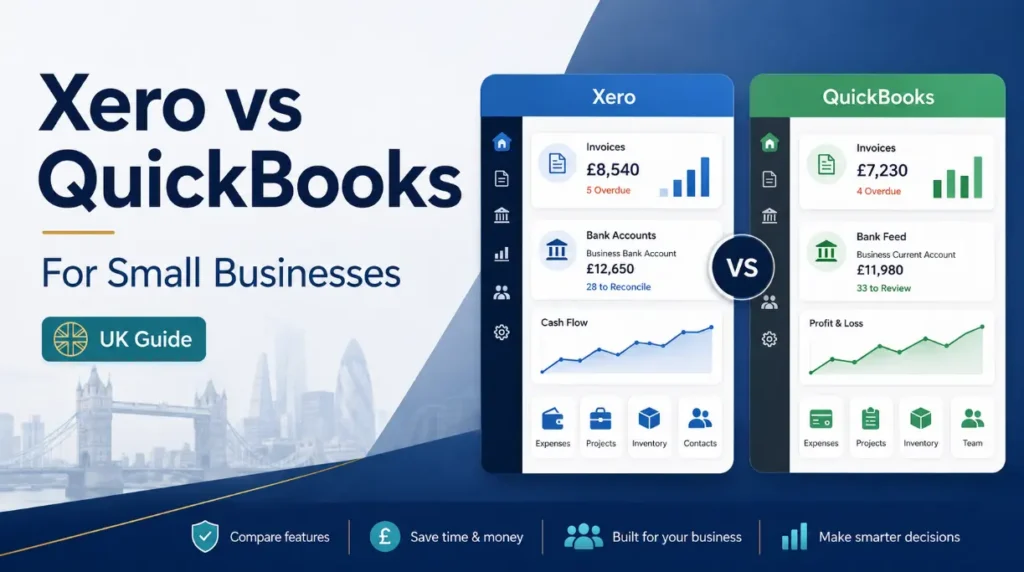
Xero vs QuickBooks for Small Businesses: Which One Actually Makes Sense?

Most small business owners don’t wake up thinking about accounting software. They usually end up comparing Xero and QuickBooks after something starts getting harder than it should be. Invoices get missed. Bank reconciliation takes too long. The accountant keeps asking for cleaner records. Or the business has grown to the point where spreadsheets simply stop working. That’s usually when the Xero vs QuickBooks for Small Businesses decision appears. And the truth is most people are not choosing between good and bad software. They’re choosing between two capable systems that start to feel quite different once real people are using them every week. Neither fixes poor bookkeeping on its own. The right choice depends on how your business actually works. The decision usually starts with a hidden cost problem, not a software problem Most people think they are comparing monthly subscriptions. They’re not. They’re really trying to avoid paying for something they didn’t realise they would need later another user, payroll, expenses, project tools or a higher plan. Xero says its main subscriptions have no per-user licence fees, although some features such as Expenses, Projects and Payroll have their own included usage limits and additional charges. You can see the current details on Xero’s UK pricing page. QuickBooks approaches access differently. Its current UK plans allow: You can check the latest plans directly on the QuickBooks UK pricing page. That difference sounds small until a director, bookkeeper, admin employee and finance person all need their own access. So the useful question in a Xero vs QuickBooks for Small Businesses comparison is not simply, “Which subscription is cheaper today?” It is: How many people are realistically going to need the accounts in the next 6–12 months? Promotional prices change regularly. Team structure normally matters for much longer. If software costs are only one part of a wider finance problem, our guide to bookkeeping costs for small businesses explains what businesses are actually paying for beyond the software subscription. Why some businesses find Xero easier and others barely notice a difference People often describe Xero as simpler, but that doesn’t necessarily mean QuickBooks is difficult. What they normally mean is that Xero keeps common bookkeeping jobs fairly direct. You connect your bank, work through transactions, match what you can and keep moving. QuickBooks puts more information and tools around the same workflow. Some owners like that because they can see more without moving between areas. Others find it busier than they need. Neither approach is automatically better. Think about an ordinary Friday afternoon. There are transactions waiting to be reconciled, two customers haven’t paid and you want to see whether this month was actually profitable. The software that gets you through those jobs without making you think too much is probably the better fit. That matters because complicated software gets ignored. And ignored bookkeeping eventually becomes expensive bookkeeping. If you’re still deciding whether software alone is enough, our guide to small business accounting explains where bookkeeping software ends and proper accounting support begins. Where Xero quietly wins: when more people start touching the accounts A business that starts with one owner rarely stays that simple. Later there may be: This is where Xero’s no-per-user licence structure becomes much more noticeable. You’re less likely to redesign an ordinary bookkeeping process just because another person needs access to the core accounting system. That can work particularly well for agencies, consultancies, growing limited companies and businesses using outsourced finance support. QuickBooks can support teams as well its higher plans currently move from three to five and eventually 25 users. The difference is that user numbers play a bigger part in deciding which QuickBooks plan you need. So for a growing company, Xero vs QuickBooks for Small Businesses can become a seat-cost decision before it becomes a feature decision. QuickBooks starts looking stronger when stock becomes part of everyday life The comparison changes when you sell products rather than time. Now you aren’t only tracking money. You are dealing with products coming in, products going out, supplier orders, returns and the cost attached to what you sell. QuickBooks Plus currently includes inventory management, including product tracking, cost of goods and purchase orders. It also includes project profitability tracking. That makes it attractive if you want more of those jobs handled inside one platform. Xero can still work very well for e-commerce. Plenty of businesses use their accounting platform alongside Shopify, Amazon, payment providers and specialist inventory software. And once stock becomes genuinely complicated, that wider setup often matters more than which accounting logo sits in the middle of it. The better question is: Do you want inventory managed mainly inside your accounting software, or through a specialist system connected to it? For a small online shop, QuickBooks’ built-in inventory may be enough. For a larger operation with several channels or fulfilment systems, integrations can become more important than built-in stock features. Service businesses have a different headache altogether An agency, consultant or freelancer usually doesn’t care about purchase orders for stock. They care about whether invoices went out, whether clients paid and whether projects are actually making money. The everyday priorities are more likely to be: This is where Xero can feel particularly natural because the core bookkeeping workflow stays fairly focused. QuickBooks deserves a serious look where project tracking is important. Its Plus plan includes project profitability, while Essentials includes employee time tracking. For a freelancer or consultancy weighing up the options, our accounting software guide for sole traders looks at the decision from a wider UK perspective. So the service-business version of Xero vs QuickBooks for Small Businesses is really about what you want the system to do beyond the books. Sole traders don’t need more features they need fewer mistakes A sole trader can easily end up paying for features they never use. Most simply need a reliable way to: Making Tax Digital now makes that choice more important for some UK sole traders and landlords. HMRC says people with qualifying self-employment and

bookkeeping cost for small businesses
Bookkeeping

Bookkeeping Costs for Small Businesses in the UK: What Should You Really Pay?

You send invoices, pay suppliers and chase customers. Then someone still has to make sure the numbers are accurate, compliant, and ready for HMRC. That is why Bookkeeping Costs for Small Businesses in the UK vary so much. A sole trader with one bank account and 30 monthly transactions will not need the same support as a VAT-registered limited company with employees, card payments and hundreds of invoices. For most small UK businesses, bookkeeping may cost around £50 to £500+ per month, while hourly support commonly falls between £25 and £60. Simple work can cost less; complex businesses can pay more. The better question is: “What is included?” If you’re unsure whether to outsource or manage finances yourself, read our guide on small business accountant vs DIY accounting. What are average Bookkeeping Costs for Small Businesses in the UK? There is no official national price list, but fixed monthly packages are common because they give business owners a predictable bill. Business type Indicative monthly cost Typical work Low-activity sole trader £40–£100 Basic records and bank reconciliation Active sole trader or freelancer £75–£200 Regular bookkeeping, expenses and simple reports Small limited company £120–£400 Several accounts and monthly reporting VAT-registered company £180–£600 Bookkeeping, VAT checks and return preparation Growing business with staff £300–£1,000+ Higher volume, payroll, VAT and reporting These are budgeting ranges, not guaranteed quotes. When comparing Bookkeeping Costs for Small Businesses in the UK, check whether VAT returns, payroll, software, catch-up work and year-end support are included. For a deeper breakdown of accounting fees, see how much does an accountant cost in London. How much do bookkeepers charge per hour in the UK? A freelance bookkeeper hourly rate in the UK may start around £18–£30 for straightforward work. Experienced or qualified support often sits around £30–£60 per hour. Hourly pricing can suit: For ongoing support, fixed packages are usually more cost-effective. What affects Bookkeeping Costs for Small Businesses in the UK? Several factors influence pricing: If you’re VAT registered, understanding common pitfalls can help reduce costs. Read about common VAT mistakes small businesses make. Bookkeeping Costs for Small Businesses in the UK: Sole Traders A sole trader may pay around £40–£150 per month for basic bookkeeping. More complex setups can cost £150–£300+. Before choosing a provider, ensure your package includes: You can also explore bookkeeping for sole traders for tailored guidance. What are bookkeeping costs for a limited company in the UK? Limited companies typically pay more due to stricter compliance requirements. Costs increase when combining bookkeeping with payroll and tax services. Learn more about small business accounting. How much do bookkeeping and VAT return services cost together? Many providers bundle bookkeeping and VAT returns into one monthly fee. This ensures records are maintained consistently. VAT-registered businesses must comply with Making Tax Digital, which requires digital record-keeping and submissions. You may also benefit from schemes like the VAT Flat Rate Scheme depending on your business type. Is outsourced bookkeeping cheaper than hiring in-house? For most small businesses, outsourcing is more cost-effective. Hiring in-house includes: Outsourcing gives flexibility and access to expertise without long-term commitments. How many hours of bookkeeping does a small business need? Typical monthly estimates: Automation helps, but human oversight is still essential. How does Making Tax Digital affect Bookkeeping Costs for Small Businesses in the UK? Making Tax Digital (MTD) increases compliance requirements and may raise costs due to: From April 2026, more businesses must comply. Learn more about MTD requirements. Do I need an accountant or a bookkeeper in the UK? A bookkeeper manages daily financial records, while an accountant handles tax planning, compliance, and reporting. Most businesses benefit from both. If you’re unsure, read signs your business needs an accountant. Clear books, clear price: how Path Accountants helps A low headline fee can be misleading if essential services are excluded. At Path Accountants, we assess your business needs transaction volume, VAT, payroll, and reporting to provide tailored support. Our services include: We also offer a free consultation to help you understand your options. Conclusion The right bookkeeping service should provide accurate records, useful insights, and compliance with HMRC. Choose a provider that fits your current needs and can scale with your business. The cheapest option is not always the best value comes from clarity, accuracy, and support. If you’re ready to simplify your finances, request an appointment with Path Accountants today. FAQs

How Much Does an Accountant Cost in London
Small Business Accounting

How Much Does an Accountant Cost in London in 2026?

A freelance designer in Croydon might only need help with one Self Assessment return each year. A growing café in Central London may need weekly bookkeeping, payroll, VAT returns and someone to answer questions when cash flow gets tight. Both need an accountant, but their fees will be completely different. That is why one London business owner may receive a quote for £100 a month, while another is quoted £400 or more. It does not always mean the higher-priced accountant is expensive or the cheaper one is offering better value. The real difference is usually the amount of work involved and the level of support included. Some accountants provide basic year-end filing only. Others manage your books throughout the year, run payroll, submit VAT returns, monitor tax deadlines and help you make better financial decisions before problems arise. So, how much does an accountant cost in London in 2026? For most sole traders and small businesses, the answer depends on business structure, transaction volume, VAT registration, payroll and how often you need advice. This guide breaks down realistic London prices, what should be included and how to avoid paying for the wrong package. Need a clearer idea of what your own business might pay? Book a free consultation with Path Accountants and get a straightforward view of the support you need before choosing a package. What Is the Average Cost of an Accountant in London? For most freelancers, sole traders and small businesses, accountant fees in London generally fall within the following ranges: Accounting service Typical cost in London Straightforward Self Assessment return £150–£400 one-off More complex Self Assessment return £400–£800+ one-off Sole trader accounting support £75–£200 per month Small limited company accounts £100–£300 per month VAT, payroll and bookkeeping package £250–£500 per month Growing or complex business £500–£1,000+ per month Bookkeeping-only service £35–£150+ per month One-off accounting or tax advice £50–£200 per hour These are guide prices rather than fixed fees. Recent UK market guides show that straightforward sole trader services may cost a few hundred pounds a year, while full small-business packages can reach several hundred pounds each month. Therefore, How Much Does an Accountant Cost in London depends on your structure, transaction volume and the amount of help you need. A freelancer with organised records may need only annual support. A limited company with employees, VAT returns and hundreds of monthly transactions will require much more work. Why Do Accountant Fees Vary So Much? Accountants do not price their services only by looking at your turnover. They consider the time, responsibility and complexity involved in managing your accounts. The main factors include: London firms may sometimes charge more because of higher operating costs. However, cloud accounting has made location less important. Many businesses now work with London accountants through secure software, video meetings and online document sharing. How Much Does an Accountant Cost Per Month UK Businesses? People searching how much does an accountant cost per month UK often expect one standard monthly price. In reality, monthly packages are built around the services a business actually uses. A basic package might cost between £75 and £150 per month. It may include: A package between £200 and £500 per month may also include: Some businesses pay more than £500 per month because they need detailed reporting, forecasting or financial leadership. At that stage, fractional CFO support may be more suitable than a standard compliance package. When considering How Much Does an Accountant Cost in London in 2026, calculate the full annual amount and check what it includes. A £99 monthly package can become expensive when VAT returns, software, payroll and year-end accounts are added separately. A £250 package may offer better value when all those services are included. How Much Does an Accountant Cost for Self-Employed People? A self-employed person with one main source of income and well-organised records may pay around £150–£400 for a straightforward annual Self Assessment. The cost can rise when you have: Someone who needs support throughout the year may pay approximately £75–£200 per month. That could include bookkeeping checks, tax estimates, expense advice and help preparing for filing deadlines. Our guides on bookkeeping for sole traders and claimable self-employed expenses explain how better records can reduce errors and avoid unnecessary tax. Business-related accountancy fees can normally count as allowable expenses for a sole trader, provided the work is carried out for business reasons. Personal elements of a tax return may need to be treated differently, so the invoice should separate them clearly. You can also review the official HMRC guidance on legal and financial expenses. Will Making Tax Digital Affect Accountant Fees in 2026? Making Tax Digital is an important reason some sole traders and landlords may need more regular accounting support in 2026. From 6 April 2026, sole traders and landlords must use Making Tax Digital for Income Tax when their qualifying self-employment and property income for the 2024–25 tax year exceeded £50,000. Those affected must keep digital records and use compatible software to provide updates to HMRC. The threshold is scheduled to reduce further in later tax years. Read the full rules in our guide to Making Tax Digital or check the official GOV.UK Making Tax Digital eligibility guidance. This does not automatically mean every self-employed person needs an expensive package. However, someone requiring software setup, digital bookkeeping and regular checks may pay more than a person who previously needed only one annual tax return. What Does a Small Business Accountant Normally Cost? A small business accountant may charge between £100 and £300 per month for standard accounts, tax returns and basic support. A business with payroll, VAT and regular bookkeeping may pay £250–£500 per month. More established businesses can pay £500–£1,000 or more when they need management accounts, forecasts and strategic advice. Reliable small business accountants should do more than submit forms. They should help you understand: Our guide to small business accounting explains the main tasks that should be managed during the year. You can also compare professional

Signs Your Business Needs an Accountant in London
Small Business Accounting

Signs Your Business Needs an Accountant

Most business owners start by doing everything themselves. You send invoices, check the bank, chase payments, keep receipts and try to understand tax when the deadline comes close. At first, that feels normal. You are saving money and staying in control. But as the business grows, the numbers become harder to manage. More customers means more transactions. More expenses means more records. More income also means more planning. That is when the Signs Your Business Needs an Accountant begin to show. You do not need to wait until things go wrong. If your accounts are taking too much time, causing stress, or stopping you from making clear decisions, it may be time to get proper support. You can also compare the real difference between doing it yourself and getting help in this guide on small business accountant vs DIY accounting. Your bookkeeping is no longer a small task Bookkeeping often starts as a quick job. You update a spreadsheet, save a few receipts and check what came in during the week. Then the business gets busier. You now have card payments, invoices, subscriptions, supplier bills, refunds, software costs, travel costs and bank charges. What used to take 20 minutes now eats into your evening. This is one of the clearest Signs Your Business Needs an Accountant because messy bookkeeping affects every part of the business. You may notice this when: An accountant can help you build a simple system that works through the year. That means cleaner records, better categories and fewer last minute surprises. If this is already becoming a problem, you may also find this guide on small business bookkeeping useful. You are busy but still unsure about profit A busy business is not always a profitable business. You may have customers, invoices and regular sales, but still feel short of money. This can happen when costs rise quietly, prices are too low, customers pay late, or you spend money without allowing for tax. One of the strongest Signs Your Business Needs an Accountant is when you cannot answer this simple question with confidence. Are we actually making money? A proper accountant can help you understand: This kind of clarity changes how you run the business. You stop guessing from your bank balance and start making decisions from real numbers. If turnover and profit often feel like the same thing, read this simple guide on turnover vs revenue. Tax feels stressful every year Tax should not feel like a panic job. But for many business owners, it does. The problem usually starts months earlier. Receipts are missing. Expenses are unclear. Income has not been checked properly. Then the deadline gets close and everything becomes rushed. This is one of the most common Signs Your Business Needs an Accountant. For Self Assessment, the online filing and payment deadline for the 2025 to 2026 tax year is 31 January 2027, according to GOV.UK Self Assessment deadlines. An accountant can help you avoid tax stress by: The value is not only in filing the return. The real value is knowing where you stand before the deadline arrives. For more help, see our guide on the tax return deadline and what expenses you can claim as self employed. VAT is getting close and you are not sure what to do VAT is one area where waiting too long can cause real problems. In the UK, a business must register for VAT when taxable turnover goes over £90,000. GOV.UK VAT registration guidance also says businesses must usually register within 30 days of the end of the month when they crossed the threshold. This is one of the biggest Signs Your Business Needs an Accountant because VAT affects more than a form. It affects your pricing, invoices, cash flow, software and customer communication. You should speak to an accountant if: VAT is easier to manage before you cross the threshold. Once you are already behind, it becomes more stressful and more expensive to fix. These guides on the VAT threshold, common VAT mistakes small businesses make and Making Tax Digital can help you understand the basics. Cash flow keeps catching you off guard Cash flow is the money moving in and out of your business. It is not the same as profit. You can be profitable on paper and still struggle to pay bills if clients pay late or costs arrive before income. This is why cash flow problems feel so frustrating. The business looks busy, but the bank account still feels tight. This is one of the practical Signs Your Business Needs an Accountant because cash flow affects daily decisions. An accountant can help you see: With a simple cash flow forecast, you can plan ahead instead of reacting when money is already short. If unpaid invoices are part of the issue, this guide on creditors and debtors explains the difference in plain English. Limited company duties are becoming confusing A limited company can be a good structure, but it comes with more responsibility than being a sole trader. You need to think about annual accounts, Corporation Tax, director salary, dividends, company records and deadlines. Personal money and company money also need to stay separate. This is one of the most important Signs Your Business Needs an Accountant, especially if you formed a company but still manage the money like a sole trader. Private limited companies usually need to file annual accounts with Companies House 9 months after the company financial year ends. Company Tax Returns are usually due 12 months after the accounting period ends, according to GOV.UK company accounts and tax return guidance. An accountant can help you understand: This support can prevent confusion before it turns into penalties or poor tax planning. If you are unsure whether your structure still fits, read our guide on sole trader vs limited company and our latest Corporation Tax guide. Your reports do not help you make decisions Many business owners have accounting software, but the reports are not useful to them. They

Scroll to Top